Why more companies are turning to Fisher for executive education

By Vicki Christian
Fisher College of Business
Meredith Conder is still amazed at how much her world has changed in just six short years. As an executive education leader with decades of experience, Conder shakes her head when talking about the dynamic business landscape.
“Since the pandemic the workforce has changed dramatically: the way people lead, manage change and relate to multi-generations in the workforce,” said Conder, executive director of Executive Education at Fisher College of Business.
“That, plus the rollout of ChatGPT making AI accessible to everybody, has made work more complex and has had a huge impact on how we do business. Companies are looking to us for guidance to learn how to adapt.”
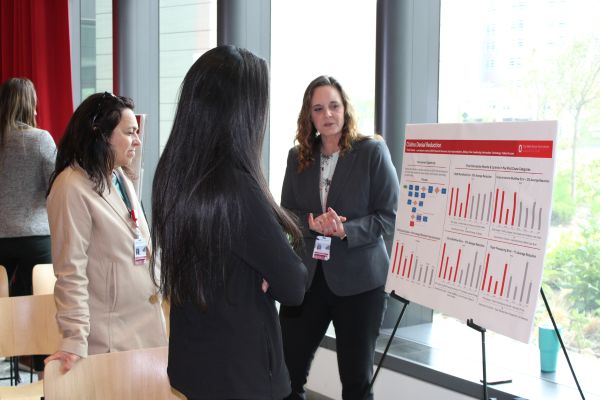
In response, Fisher’s Executive Education Department has refined its portfolio of custom programs, graduate certificate offerings and topic-based courses to ensure they remain timely, relevant and aligned with the skills and experiences needed to keep pace with and compete in dynamic markets. Refocused efforts to build new connections with industry while strengthening existing ones help Executive Education incorporate real-world insights and emerging practices in its programs, Conder said.
“Companies partner with us to help them bridge the gaps between their goals and their organizational readiness,” she said. “Because we have developed long-lasting relationships with many companies we work with, they trust us to help them train their leaders on ‘just-in-time’ topics.”
From 2022 to 2026, Fisher’s Executive Education Department has significantly expanded the number of clients, companies and organizations participating in its offerings, especially its topic-based programs. These one- to two-day programs provide participants with quick dives into topics relevant to business today, including AI and digital fluency, leadership and change management, financial and strategic decision-making and process improvement.
Fisher currently offers a portfolio of 16 topic-based programs; four years ago, the college offered just two. As the number of these programs has grown, so too has the number of participating companies. Individuals representing 92 organizations turned to Fisher’s topic-based programs in 2026, a more than tenfold increase from the eight in 2022.
“Whether it was understanding governance, mastering prompt engineering or exploring how GenAI will transform the supply chain, the AI programs offered clear frameworks I could apply immediately,” said Scott Hatten, director of digital transformation at DHL Supply Chain, who completed three topic-based programs focused on AI and digital fluency programs at Fisher.
“These insights directly enhanced the way my team and I approach innovation, automation and decision-making across a large and diverse operation. Fisher didn’t just teach me about AI, they elevated how I lead through change, communicate vision and support the development of others.”
Long considered a cornerstone of Fisher’s Executive Education non-degree offerings, custom programs, tailored learning experiences designed in partnership with organizations to address specific goals, and graduate certificates have likewise been a recent focus of strategic investment and growth.
Custom programs grew from 34 to 39, while unique custom programs increased from 14 to 29. The number of custom clients more than doubled from 10 to 23 companies between 2022-2026.
Foundational to Fisher’s growth in custom programs has been and will continue to be core partners such as JPMorganChase (JPMC), Honda of America and the National Association of Wholesaler-Distributors.
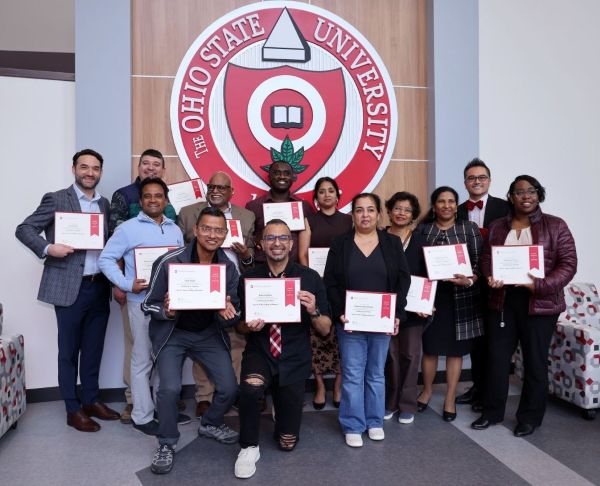
JPMC has long prioritized lifelong learning and has leaned on Fisher to provide a Graduate Certificate in Data Analytics program to its employees for the past eight years.
“Fisher's programs help us strengthen our workforce by upskilling employees in data literacy,” said John Samenuk, managing director of operations at Chase and executive sponsor of the Graduate Certificate in Data Analytics. “The curriculum builds practical capabilities our teams can put to work immediately.”
“Our relationship with Fisher allows us to tailor the program as our needs evolve; the faculty and staff have continually modernized the certificate experience. Because the program is exclusively for JPMorganChase employees, participants share a common context and set of challenges, which leads to rich, candid conversations both in and out of the classroom.”
Another industry partner, the National Association of Wholesale Distributors (NAW), has long relied on Fisher to deliver its Distribution Leadership Program to the NAW workforce.
“For more than 60 years, our partnership has stood as a cornerstone of leadership development,” said Patti Rausch, vice president of research and innovation for the NAW. “We have helped shape generations of leaders who are driving innovation, strengthening their companies and advancing the industry as a whole. It brings together timeless leadership principles with the modern realities our members face, from supply chain complexity to emerging technologies.”
“Our members return to this program year after year because it delivers not just knowledge, but perspective, confidence and a network that lasts well beyond the classroom.”
Other strong examples of the longstanding impact of custom corporate programs at Fisher include the construction industry, where workers and leaders from the Builders Exchange of Central Ohio have turned to Fisher for continuing education.
“Fisher has provided valuable training and expertise to participants of our Rising Leaders Institute,” said Mary Tebeau, executive director of Builders Exchange of Central Ohio. “This exclusive program builds high potential employees in the commercial construction industry by further developing their management skills and business knowledge. For the past 20 years, we have witnessed graduates of this leadership program excel within their companies and the industry.”
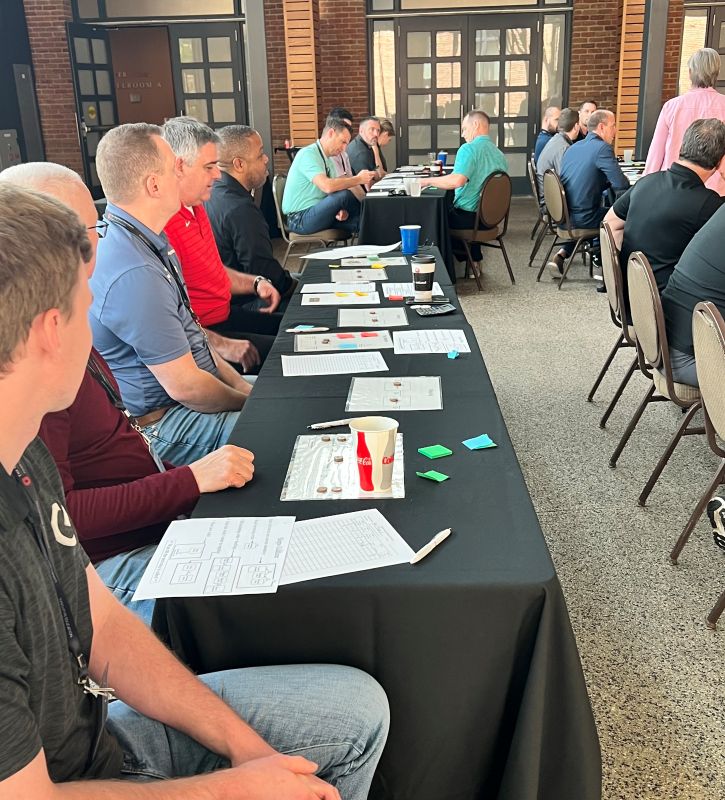
Across campus and throughout the region, these non-degree Executive Education offerings are driving real impact for vital companies and their customers.
“Through the Lean Leader Certification Program, more than 100 of our leaders have led dozens of improvement initiatives, delivering measurable gains in patient experience, access, operational performance and financial outcomes,” said Dennis DeLisle, executive director of Ohio State University Wexner Medical Center and Richard M. Ross Heart Hospital. “This partnership has strengthened our problem-solving, focus on process and mindset of continuous improvement.”
Since it was established in 1954, Executive Education at Fisher has empowered individuals and organizations to remain at the forefront of their industries through tailor-made programs.
The department has partnered with companies such as American Electric Power (AEP), the U.S. Army, Bob Evans Farms, Cardinal Health, Coca-Cola North America, the Federal Bureau of Investigation, Mettler Toledo, Nationwide Insurance, PricewaterhouseCoopers (PwC) and Scotts Miracle-Gro.
Its next step forward, Conder said, are offerings focused on professional coaching and workplace wellness, with a particular emphasis on resilient cultures, managing conflict and stress, conducting difficult conversations and building workplaces where mental health isn’t stigmatized.
“We are very aware that AI and geopolitical changes cause a lot of stress,” she said. “Mental health wellness impacts productivity just like AI impacts productivity. And to think of one without the other lacks insight. We believe people are the future, not AI. But if we allow AI and other changes in our world to destroy our people, we're not going to move forward.”
“Whether it was understanding governance, mastering prompt engineering or exploring how GenAI will transform the supply chain, the AI programs offered clear frameworks I could apply immediately. Fisher didn’t just teach me about AI, they elevated how I lead through change, communicate vision and support the development of others”