Thriving at full speed: Sophia Mullins (BSBA ’17) redefines wellness for high achievers

By Margaret Farnham
Fisher College of Business
Sophia Mullins had her sights fixed firmly on a Wall Street career after college.
She made all the right connections through campus programs like Fisher Futures and Buckeye Capital Investors and completed multiple internships to secure her spot as an investment banking analyst at Barclays in New York City. She set and met her goals with the confidence and hard work she puts into, well, just about everything.
Like many in finance, Sophia (BSBA ’17) considers herself a high achiever in a high-intensity career. But high intensity has its challenges. Managing your health and well-being often takes a backseat to managing mergers and acquisitions.
Nobody knows that better than Sophia.
A few years into her career, as she was transitioning from investment banking to private equity, she started an online community called Wall Street Wellness.
“I started it organically to share my journey of working 60, 80, 90 hours a week and balancing my well-being journey,” she said. “I shared what it looked like to meal prep and take care of yourself while you’re in a really demanding career.”

Then she was diagnosed with a stress-induced autoimmune disease that she was able to send into remission through lifestyle changes and without medication while continuing to work in finance.
“That really opened my eyes to the power of leaning into your well-being in order to show up as your best self personally and professionally,” she said. “I started sharing about that with my online community at a time when it was pretty taboo to talk about mental health and burnout and autoimmunity, especially in the context of Wall Street.”
The response from that community was overwhelming.
“So many were grateful because they had been having these same struggles,” she said. “But because none of these conversations were coming up organically and no one really had a support system, they felt like they were alone.”
The need for information and support ultimately led Sophia to pivot her career and start Wall Street Wellness LLC, a wellness consultancy focused on helping other high achievers reach their full potential in demanding industries. The consultancy works directly with organizations to facilitate well-being programming and with individuals through what she describes as a first-of-its-kind health coaching platform.
As the organization’s CEO and a certified health and wellness coach and nutritionist, Sophia leads workshops for investment banks, Big Three consulting firms and top corporations. She also visits college campuses, like Fisher, to speak with students about proactively building their health alongside their careers.
We sat down with her to talk about how high achievers can maintain their health and a high-intensity career.
Q. How do you define a high achiever?
Someone who holds themselves to a high standard of excellence and wants to build a big life. They want to feel fulfilled in their career, their relationships and in their health.
Q. Isn’t that what often leads to stress?
Absolutely! It can become almost a wobbly wheel, where you keep raising the bar on yourself. The bar was 100 percent; you hit that bar and now the bar is 120 percent and then 140 percent. That can only go on for so long, holding yourself to the standard of constantly smashing through the brick wall, until you aren’t able to smash through the brick wall any longer.
Q. What are some of the high-intensity careers?
Finance for sure, including investment banking, private equity, hedge funds. I saw a lot of the same archetypes showing up in those industries, but a lot of my clients are also from consulting, tech and law firms. The name “Wall Street Wellness” is an ode to my specific background, but the people we serve are across the high-intensity umbrella. A lot of these burnout problems and high-achieving problems are just people problems; they’re not specific to any industry.
Q. Is it possible to remain in a high-intensity career and maintain your well-being?
Yes. I absolutely want people to stay in high-intensity careers. It’s about arming them with the tools and reminding them of their own agency and autonomy in their well-being journey, so they can use those tools in a way that they are optimizing how they feel and making proper decisions for their health.
Q. When you talk about tools, you refer to non-negotiables. Can you explain what those are?
Defining your non-negotiables means getting clear on what three to five things move the needle for your well-being. For some people, it might be a walk, daily meditation and eating an anti-inflammatory diet. For others, it is a run, seeing friends regularly and being mindful of caffeine. Everyone has non-negotiables, but when you define those top three to five things that truly move the needle for you, and then realistically integrate them into your routine, it can have a massive impact and set yourself up for sustainable success. If you have 10-plus things you’re trying to integrate all at the same time, that is setting yourself up for frustration and possibly failure.
Q. Can most people identify their non-negotiables?
More than half of my clients already know what they want to integrate. They know they want to eat healthier or move more, and they know what types of movement resonate with them. They know they want to be more mindful, and they’re interested in trying meditation and breath work. But there is a gap between knowing they want to do these things and integrating them into their life because they have such limited free time. We help them identify how they want to improve their well-being and then provide tools and accountability, so the positive change actually sticks.
Q. What are some of the characteristics that lead to stress and burnout?
Some of the signs I see in my clients is a general sense of disengagement from life. They feel like they’re on autopilot. They don’t remember eating their meal at the desk. They don’t remember what happened throughout the day. They aren’t getting that emotional enjoyment from seeing their friends. That is one of the universal signs: you’re not getting the same joy from life as you normally feel.
Your body also starts to whisper. You notice that you’re not waking up as energized, or you feel that you’re crashing throughout the day. Also, there is a general sense of feeling overwhelmed, that there is no way you can get through your to-do list or even get started on your to-do list.
Q. Why is attention to our well-being so important today?
People are feeling the unhealthiest, the loneliest and the most depleted in their mental health than they ever have in history. We are in a well-being crisis.
At the same time, the wellness market is the largest it has ever been. McKinsey & Company puts the global wellness industry at $2 trillion. We’re putting so much money into products and supplements and biohacking, but the results are not trickling through. One supplement alone is not going to change your life. One biohacking gadget or red light face mask is not going to change your life. It's marketed to us that these products are going to single-handedly transform the way we look and feel; that’s simply not the case.
I have no problem with supplements and wellness gadgets, I have plenty myself, but they are not the core of my well-being journey. You have to do that inner work and optimize your lifestyle and routines and ultimately change how you feel in your body and in your environment ... then you can add the fun extras.
Q. Last autumn, you led workshops for Fisher students interested in high-intensity careers. Was your message to them different than your message to corporate clients?
The tools and takeaways are the same, but we’re meeting them earlier in their career life cycle. The sooner you can arm driven people with these tools, the more likely they will be equipped when they feel the approach of burnout creeping in.
I didn’t even know what burnout was when I was a student. I didn’t know the health implications of stress or what an autoimmune condition was. I view Wall Street Wellness as serving that student and early career version of myself. I get this opportunity to turn that pain into purpose and elevate people to live their most vibrant, fulfilling lives.
Q. If you could tell fourth-year Sophia something, what would that be?
I would say that textbook success at the expense of your health is not success. If you do not feel well enough or vibrant enough or clear enough to enjoy the success you are building for yourself, it’s a loss.
Q. You’re living and working in Miami, Florida, now. Do you still see yourself in a high-intensity career?
Now that I’ve pivoted from Wall Street to full-time entrepreneurship, I joke that I currently have the strictest boss I’ve ever had (myself). I will always view New York as the center of the world, and I still travel there a lot for work, but Miami gives me a natural homebase to decompress. I find it better for my personality type.
I will always have high expectations for myself and hold myself to a high standard of excellence. If anything, I’ve had to learn to put my money where my mouth is. Mitigating burnout is something that I constantly have an inner dialogue about. I’m so wired to push the bar, that is why I am so passionate about this work. I’m passionate about awakening people to their own ability to feel better in their life and enjoy the success they have worked so hard to establish.
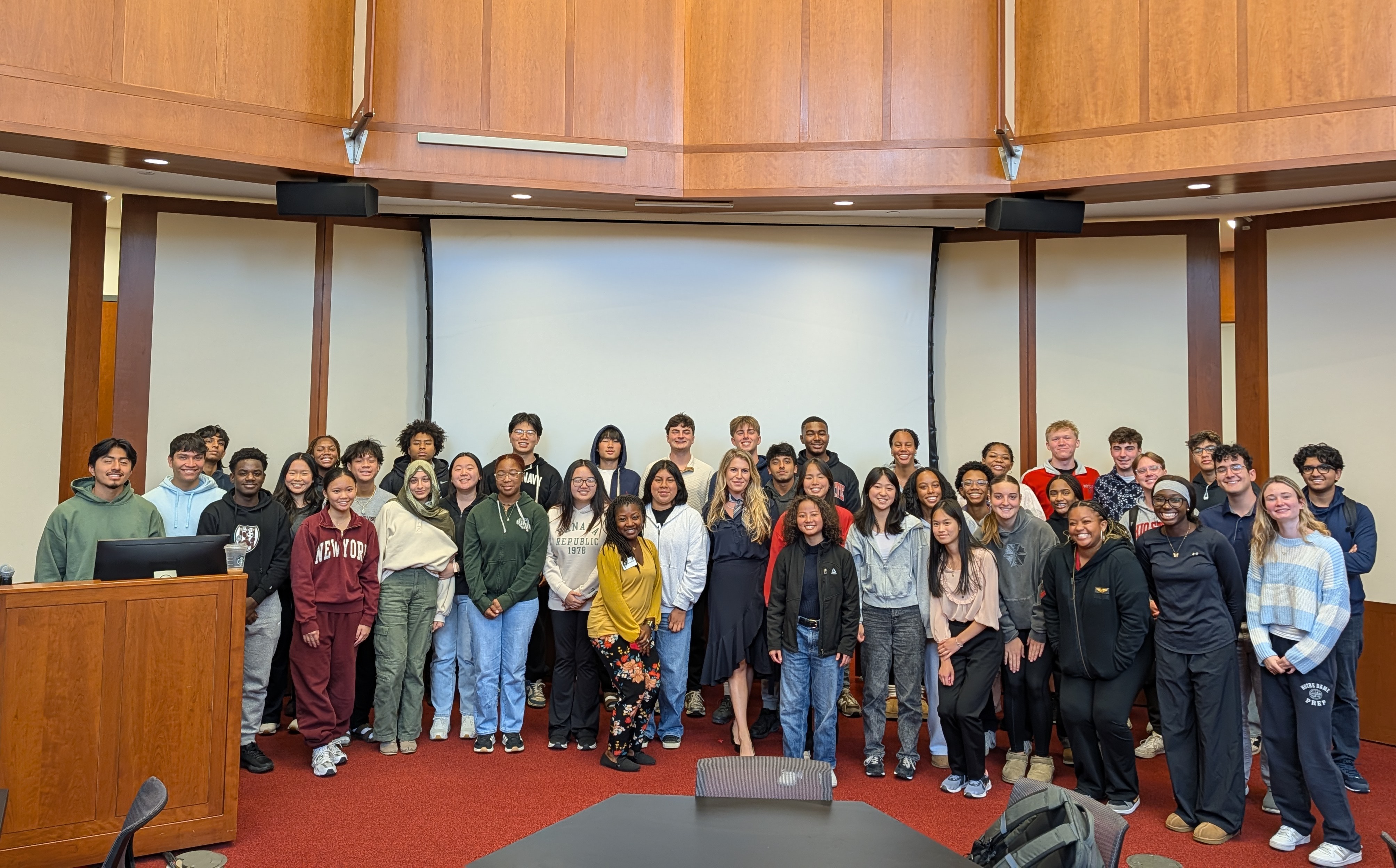
Photos curtesy of Viann Goncalves
"I didn’t even know what burnout was when I was a student. I didn’t know the health implications of stress or what an autoimmune condition was ... I get this opportunity to turn that pain into purpose and elevate people to live their most vibrant, fulfilling lives."