Shoes, shirts and sugar: Olivia Tyka’s operations journey

Olivia Tyka learned early from her immigrant parents that experiences make you who you are. The summers she spent in Poland with her grandparents opened her eyes to the world and created meaningful childhood experiences.
These early life encounters have continued to guide her at Fisher, where she has leaned heavily on experiential learning — not only in the classroom, but in her internships as well. From sorting shoes and creating merchandise on the fly to curating art and closing a sugar refinery, Olivia has learned to think creatively and problem solve as she prepares for her future career in operations management.
“No one can ever take your experiences away from you,” said Olivia, a fourth-year student. “My parents encouraged me to go out and try new things, new places, to make new memories. It’s why I’ve explored so many different industries in my academic career.”
Olivia’s journey began at Fisher in her hands-on operations management classes.
“The approach of case-based, real-life situations prepares you for applying the same skills to the real world,” she said. “These course-based storylines of real problems helped me learn how to work with different people and how to think creatively to solve a problem.”
Through these foundational business skills, Olivia now has the courage to be seen and heard and to explore unique business opportunities through travel, leadership roles and internship experiences.
“Fisher prepared me to speak in front of a room full of people and to be able to take charge of that room,” said Olivia, who also serves as a Peer Impact Consultant at the college. “Fisher helped me find a balance, gently guided me to success and encouraged me to find my passions.”
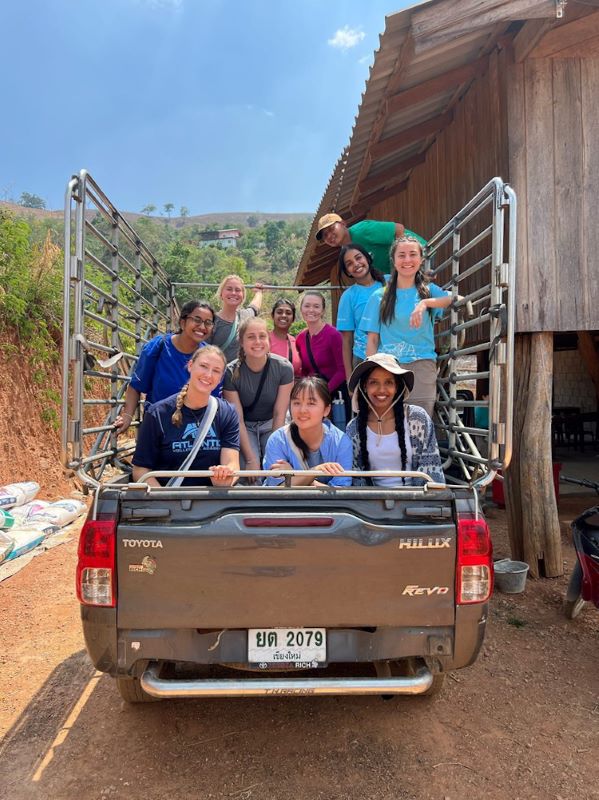
Some of her hands-on experience came through the Fisher Global Consulting Non-Profit Connor Scholars Program and her role as a project manager at the Huay Pakoot Elephant Community Foundation in Thailand as part of that program. Additionally, as the project manager for Fisher’s Students Consulting for Nonprofit Organizations (SCNO), she helped with business plans and volunteer training for pet rescues, a kidney donation organization and educational programming for women.
“At both organizations, I learned to be flexible and figure out how to make an impact,” she said. “They taught me how to create unique solutions when there aren’t as many resources available.”
Capitalizing on trends in retail
She parlayed these experiences into her first two internships at Steve Madden and Barstool Sports.
At Steve Madden, a global footwear, handbags and accessories company, she often felt like she was just spending her days sorting shoes in a closet, but she realized any experience is good experience. She also gained proficiency in online, e-commerce and enterprise resource planning systems that manage core business processes like finance, human resources and supply chain management in a single platform.
“One of the best lessons I learned was to take good notes,” she said. “I learned a lot of different management systems at one time, and I got lost at first because I wasn’t documenting the process properly. Once I started documenting the processes, I was able to build a massive how-to guide, making my day-to-day work much better.”
The experience gave her the tools she needed to obtain her next internship at Barstool Sports.
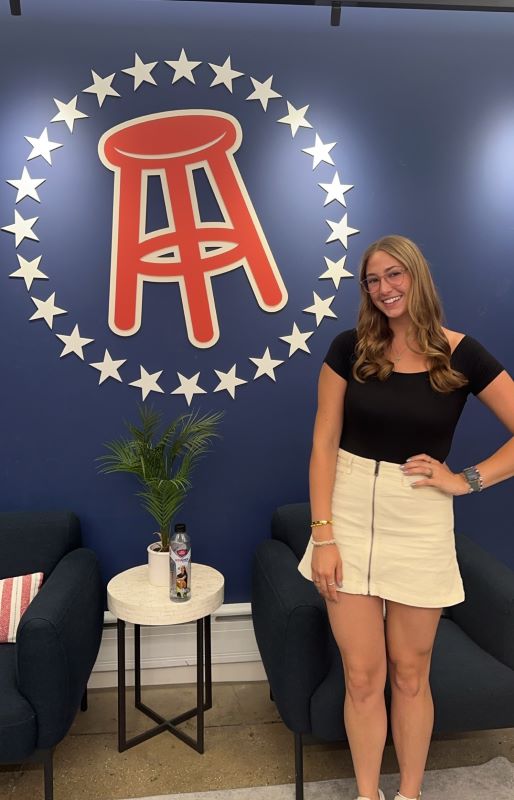
“Barstool Sports is a huge social media company for our generation,” she said. “At Barstool, I was an operations intern on a team of only three people. I helped run the wholesale and direct-to-consumer sales and oversaw the evergreen stock.”
The internship was her first experience doing data analytics, working with large data sets on forecasting and demand.
“Barstool capitalizes on trends,” she said. “In social media things are constantly changing. We had to figure out how to get a T-shirt created and online the same day, sell as much as we could and pull it down before the next thing went viral.”
What made her experiences at Barstool unique, she said, was the working style and environment of the organization.
“Even though I was in a very entertainment, sports-centered atmosphere, I was still in a corporate environment,” she said. “It was a very fast-paced, fun environment, where I experienced a mix of both relaxed days working on bigger wholesale projects, trend reports, and the holiday markets and then some chaotic days creating a T-shirt in a day and selling it online.”
Working in such a small team environment, she learned a lot about her preferred management style.
“I like to be given direct feedback — I’d rather a manager tell me what I’m doing wrong, so I can fix things right away” she said. “I also want a manager who makes an effort to get to know me outside of the working environment; it helps us gel better when working together. I want to be in an environment where it feels like a community and that I have a supportive team.”
The logistics of art
After Barstool, Olivia longed for an overseas internship experience and a chance to expand her global mindset. At the beginning of 2025, she immersed herself in the operation of an art gallery — Coletivo Amarelo — in Portugal.
With only three employees at the family-owned gallery, Olivia spent her internship opening and closing the gallery, greeting guests and answering questions. She also took photos, helped arrange a gallery opening and created a weekly newsletter in English, as well as Instagram reels and videos.
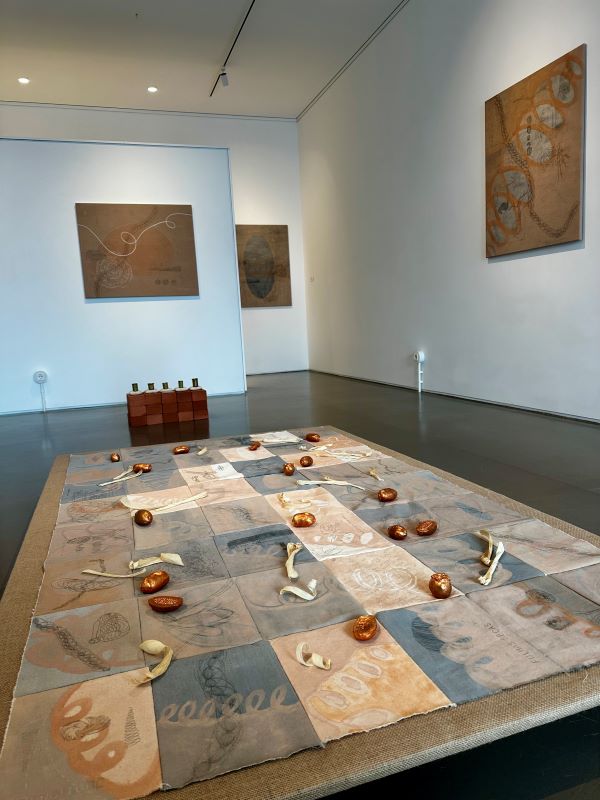
One of her major responsibilities was to help curate an exhibit, choosing the art and deciding how to display and best represent the work. “Preliminary Paper as Process” transformed the gallery into an artist’s workshop that highlighted the first drafts of five individual artists.
“I interacted with the artists, going to their studios to choose pieces, as well as marketing the exhibit and creating the gallerist’s information sheet on the artwork,” Olivia said. “There was a lot of skill required to communicate, be patient with and understand the artists’ needs. By asking probing questions, we were able to ensure we did justice to their work while also doing what was best for the gallery logistically.”
She also helped organize and select art for the gallery’s participation in several art fairs in Milan, Brussels and other parts of Portugal, handling the logistics of crating the artwork, creating display labels, calculating shipping and insurance costs and ensuring the packages arrived at their destination.
“It was interesting to see how people from all over the world would approach buying art based on where they were from,” she said. “Depending on the location of the art fair we’d adjust the type of art to suit the audience. In Brussels, for instance, we took more expensive pieces because there are a lot of art collectors and it's a wealthier city. In Portugal, we took some of the smaller pieces because art collecting isn't as big.”
One of the principal things she learned working abroad was to just slow down a bit.
“The art gallery gave me a lot of perspective on what's important in my personal life and things that I might be able to let go of in exchange for some more life experience. I learned to take a step back and enjoy where I am in the moment and be more intentional about my career going forward,” Olivia said. “When I looked for my next internship, I wanted to find a firm that had good working environment, work-life balance and benefits. It also opened my eyes to wanting to eventually work abroad. It led to me to finding Baringa, a consulting firm with offices in New York, but based in the UK.”
Decommissioning a company
As a summer associate with Baringa, she assisted in running the project management office to ensure the successful ongoing decommissioning of one of the country’s largest sugar refineries in Yonkers, New York.
“I was involved in 13 different work streams, from IT to finance to fleet management,” she said. “We had to build a reallocation model to make sure the remaining refineries could pick up the load the Yonkers’ closing would cause.”
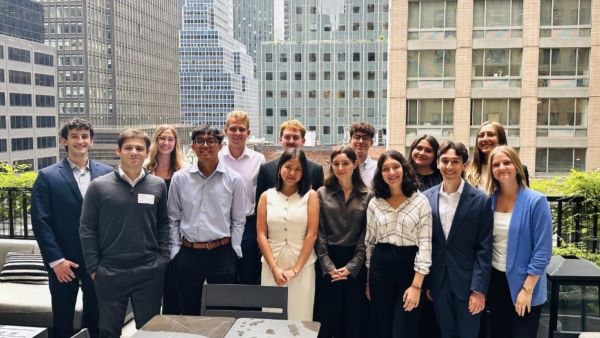
She created timelines and project plans for ramping down production and transitioning the workforce to Baltimore, Maryland. She also worked on process improvement projects for existing refineries, keeping track of timelines and facilitating decision-making and stakeholder communications.
“While we were working on how to shut down the facility, all the other refineries were also undergoing process improvement projects because they weren’t hitting their targets needed to support the influx of the Yonkers’ closing,” Olivia said. “It was a balancing act of improving every other refinery, transferring equipment from one facility to another, while ensuring Yonkers was operating up to par.”
“We also had a to negotiate union contracts deciding who was going to stay on to close down the facility and dispose of everything properly.”
The interesting thing about the project was that only one person had ever shut down a refinery before.
“There was definitely a learning curve for all of us, but it was incredible to be a part of it because I was on the client-facing portion of the project from the start, meeting daily with our point of contact at the refinery, working with everyone from the C-suite to those employees working on the floor, while trying to be sensitive to all the workers’ concerns.”
Olivia said each internship experience built on the one before, letting her carry valuable lessons from one to the next. They taught her to be flexible and adaptable, how to communicate with different audiences and that operations management comes in all shapes and sizes. The variety of experiences gave her a broader perspective and understanding of what a career in logistics and operations management can be.
“There's so much I learned from all these experiences that I carry with me,” Olivia said. “They helped me become who I am and pushed me to be my best.”
“There's so much I learned from all these experiences that I carry with me. They helped me become who I am and pushed me to be my best.”