Lean thinking at 26 stories: MBOE alums powering Ohio State’s new hospital

By Margaret Farnham
Fisher College of Business
The opening of Ohio State’s newest — and towering — state-of-the-art hospital has required meticulous attention to detail.
From stocking supply carts and installing signage to orchestrating the safe and timely movement of patients, each operational task necessitated rigorous thought, cross-functional input and solution-oriented leaders.
At the 26-story University Hospital, those leaders include numerous health care and administrative personnel who honed their organizational expertise in the Master of Business Operational Excellence (MBOE) program. Their MBOE training guided process and systems decisions throughout the months-long planning and transition to the 820-bed facility.
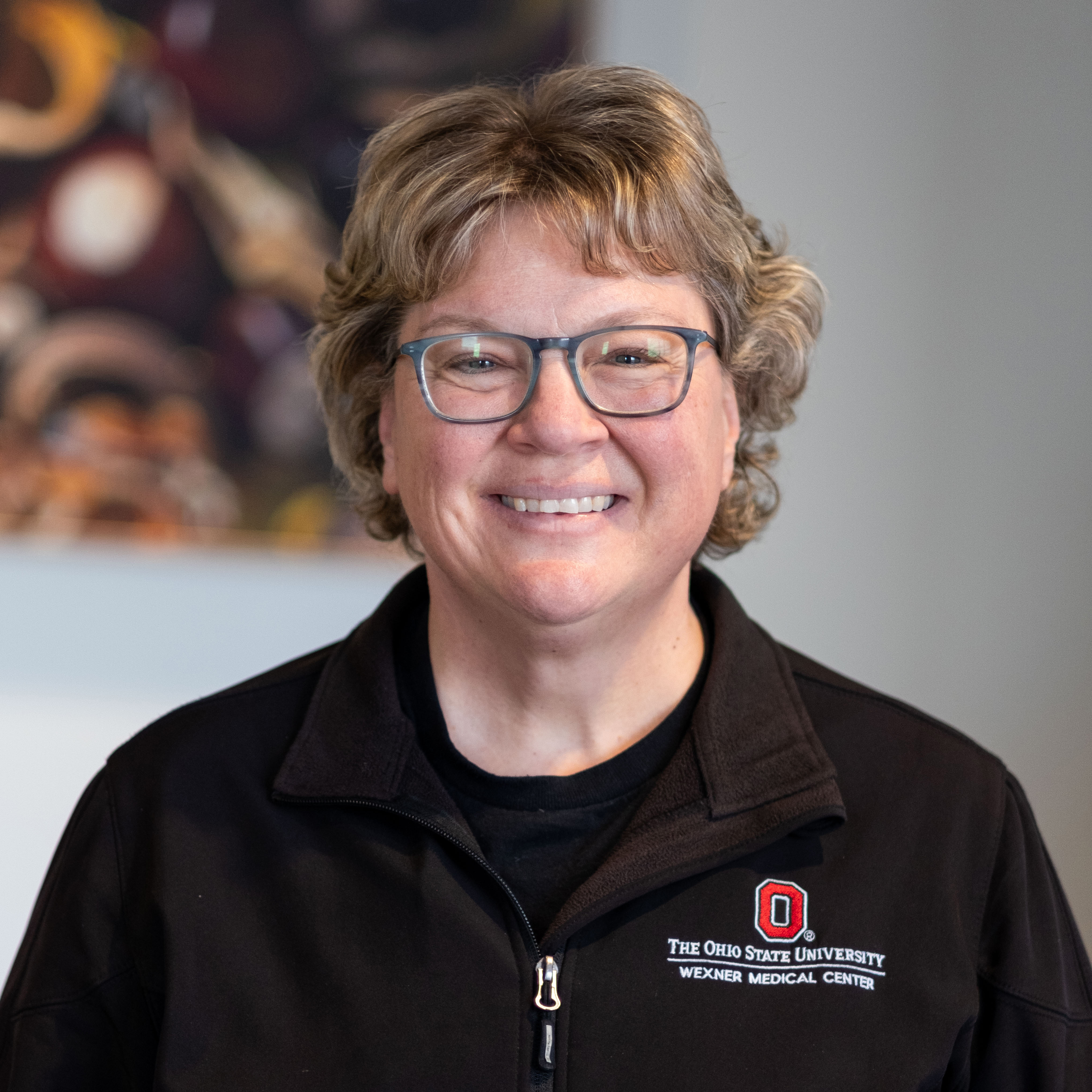
“My favorite leadership concept out of the MBOE program is Gemba. It means go where the work is done,” said Lori Abshire, assistant vice president of brand experience and content strategy at The Ohio State University Wexner Medical Center. “In my role for this new hospital, going to the Gemba is so important. Our team must understand the needs of our clinical staff, and you can’t understand all the issues sitting behind a desk. You have to go where the work is done.”
Abshire (MBOE ’15) oversees several teams including an internal team of writers, photographers, videographers and graphic designers responsible for keeping hospital personnel, patients and the public informed. In preparation for the hospital’s opening, she managed 16 work groups within the Marketing, Communications and Digital Strategy department assigned to various communications tasks, including storytelling, showcasing the new technology, producing monthly informational Tower Talks meetings for all new University Hospital leadership and generating hundreds of communications. They created new website content and a patient guide, held nine opening events, provided construction and parking updates and revised the OSUMyChart app.
“It’s an enormous lift from a communications standpoint,” said Abshire.
Her team also participated in the three dress rehearsals prior to the hospital’s opening on February 22. From nutrition services to surgery and everything in between, the communicators were there to capture video and photography of nurses, doctors, radiologists and pharmacists as they choreographed simulations for opening day and beyond.
“I thought it was really important that we had a person from our department positioned with every team during dress rehearsal,” she said. “Our clinical teams’ main priority is taking care of patients, and the dress rehearsals give us a sense of what they go through every day. It also allows us to hopefully be even better communicators in the future.”
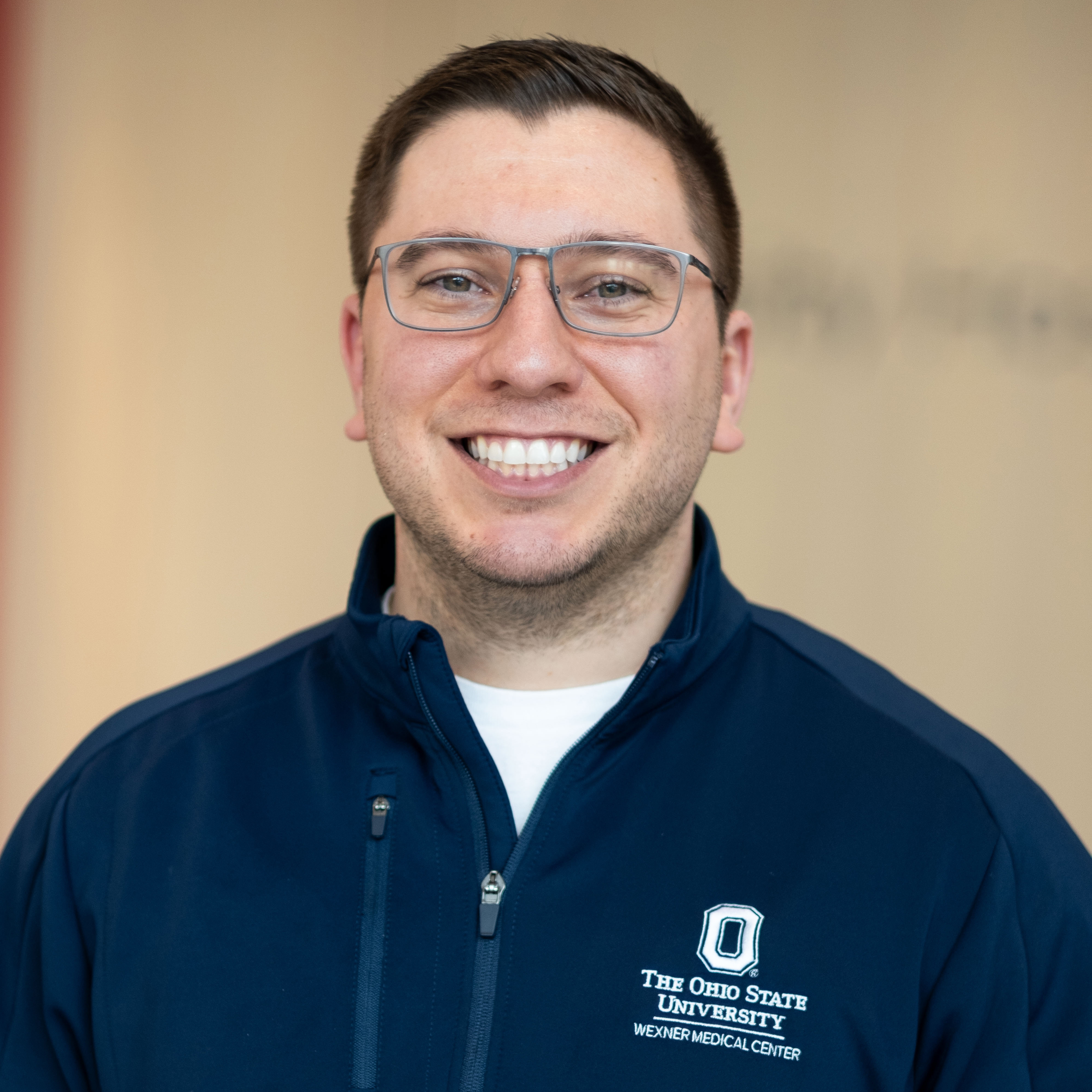
In addition to dress rehearsals, Michael Turnbull (MBOE ’24) focused on aligning workflows, policies and staff readiness across his unit. The nurse manager for a high-acuity trauma surgery unit, he also serves as a clinical consultant, partnering with nursing, operations and physician teams as they transition to the new hospital.
“It requires strong collaboration and constant attention to how decisions are made at the system level, and how we translate care to the bedside,” said Turnbull, whose leadership toolbox includes multiple techniques, such as huddle boards or a huddle script, acquired through the MBOE program.
“I have intentionally leveraged a huddle board as a frontline daily management tool,” he said, referring to a white board that allows his team to visualize and collaborate on tasks. “It’s located at the nurses’ station and creates clear visibility to our most critical safety metrics, enabling the team to actively manage acuity, strengthen teamwork and respond in real time to patient needs.”
Turnbull, who completed his MBOE about a year before transition to “the tower” intensified, also leans into systems thinking, problem-solving methodology and change management framework.
“We can anticipate risks before we go live and address them in a structural way through use of the change management framework,” he said. “Not only are we in a unique space in opening a new hospital, but we are in a High Reliability Organization (HRO) journey. We have to look at how we can build resilient systems and operate safely through everything we do with our patients.”
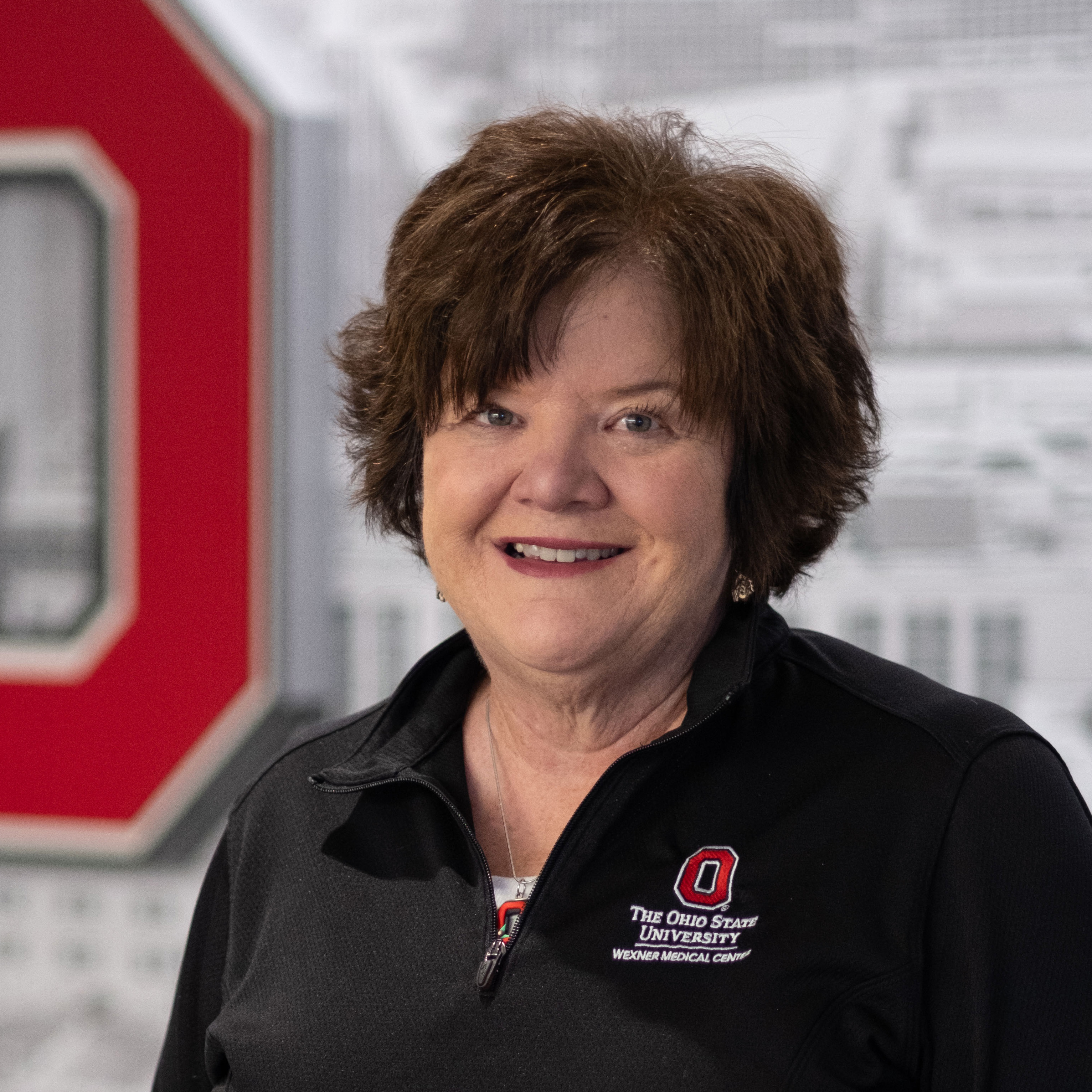
One way to build a resilient system is to eliminate and manage waste, a task high on the minds of Turnbull and MBOE classmate Devanie Gossett (MBOE ’24), an ambulatory nurse manager for surgical specialties. She oversees operations across three high-volume outpatient surgical clinics, blending clinical leadership with operational management.
“During educational tours, I consistently applied Lean principles by pointing out waste reduction, standardization, visual cues and process flow,” said Gossett. “For example, I have focused on efficient paths of travel, helping surgeons and staff understand the most efficient routes between key areas like the emergency department, operating rooms and their offices.”
Gossett became familiar with the many routes across the tower’s nearly 2 million square feet as one of 33 tower trainers responsible for orienting thousands of staff to the building, workflows and technology.
“This has included everything from facilitating educational tour sessions to participating in dress rehearsals, vendor escorts and the ribbon cutting ceremony,” she said.
In many instances, the tools from her MBOE training came into play naturally.
“One example seems simple but illustrates the mindset,” said Gosset. “I was asked to ensure that oxygen signage was installed on designated doors throughout the hospital. Rather than taking a random approach, I took five minutes to map the most efficient route for the task to minimize backtracking and unnecessary travel. Eliminating even small amounts of motion waste saves time and energy.”
It’s a fact not lost on Turnbull.
“One of the wastes in Lean is patient movement,” he said. “If we can save any number of minutes or seconds, it helps patients get the best care at the right time by the best people.”
As a nurse manager, Turnbull oversees a staff of 85 in his unit.
“I have had to be very thoughtful about my own and my staff’s utilization,” he said. “I value communication and emotional intelligence, core concepts you learn through the MBOE. They are highly transferable in nursing.”
In his clinical consultant role, he has fielded questions and provided training and support for eight different areas as they transition to the tower.
“It was really important to anticipate any failure points before went live, so we could address any potential problems,” he said. “The MBOE has given me the ability to truly think about operational efficiency as problems arise, whether it be from an equipment standpoint or working through technology optimization.”
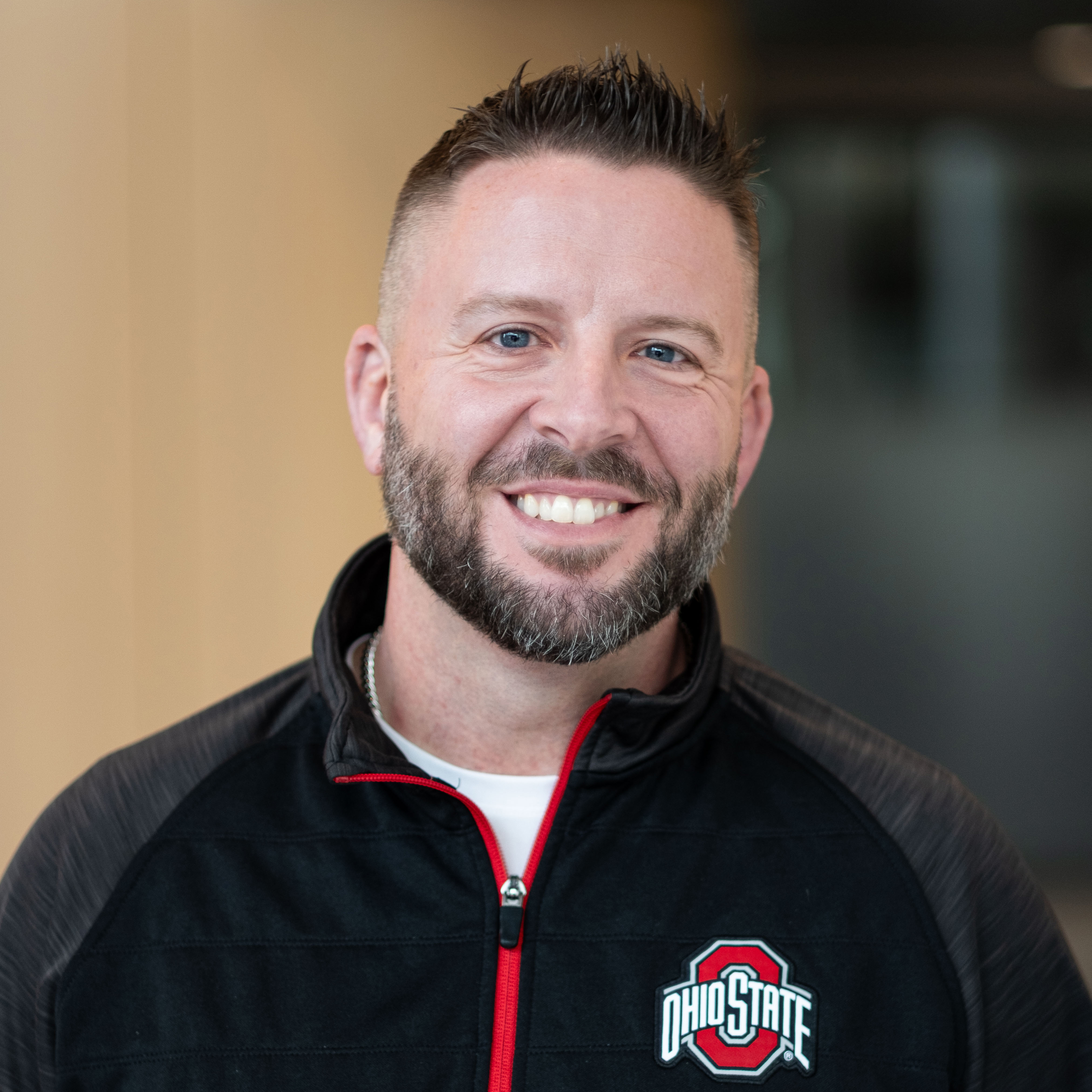
Calen Bowshier (MBOE ’24), associate vice president of perioperative and procedural services, has described his role during the transition as more heavily focused on project coordination and sponsorship, particularly when it came to moving into the hospital’s 20 operating rooms on the fourth floor.
“The OR’s were just a new space; they were not yet filled with equipment,” he said. “We had to create a very specific from-to list and phase in a transition plan as to not disrupt providing urgent and emergent care during the move. We took our existing equipment and outfitted the OR’s the week before we opened.”
Bowshier is responsible for a team that oversees perioperative and procedural care, which includes before, during and after surgery, as well as endoscopy, interventional radiology, bronchoscopy and cardiac procedures. They use process mapping to chart a patient’s experience and flow throughout the entire episode of care.
“Patients have surgery, go into the Post-Anesthesia Care Unit (PACU) and then they’re either discharged or admitted,” he said. “We looked at how that flow will work in the new tower, who needs to be involved and the path of travel for the patients, whether they’re walking in for a scheduled procedure, coming from the emergency department, an inpatient bed or the helipad.”
From the first floor to the 26th, no detail was too small as opening day neared.
“Another peer and I were tasked with what should be in the nurse-server cart,” said Turnbull. “There’s a lot of things in the cart, and we had to make sure we got it right. We were very intentional to build it out, so if there was a patient who was declining, we had all the supplies at the bedside.”
Nurse-server carts include things like gloves and equipment for drawing labs and providing oxygen. The cart’s design required Turnbull to borrow from his Lean Six Sigma training and employ 5S: sort, set in order, shine, standardize and sustain.
“I use the tools learned through the program every day,” said Turnbull. “Whether it be the leadership components or the Lean Six Sigma side; it has given me the ability to enhance my problem-solving capability.”
Ultimately, Abshire, Bowshier, Gossett and Turnbull agree this monumental move isn’t just about implementing change but leading through change.
“One of the lessons I took from the [MBOE] program is meeting people where they are in their own change process,” said Gossett. “Not everyone adapts at the same pace, and acknowledging that builds trust.”
Witnessing their teams’ growth and success throughout the move has been exciting.
“To be able to see members of my team do things they’ve never done before and take on challenges has been the best,” said Abshire. “Yes, it has been challenging. We’ve made some mistakes and we’ve learned from them. We’ve also taken some risks and been rewarded for them.”
“We have this new hospital, the largest building in Ohio State’s history and the most technologically advanced hospital right now. You feel significant weight to make sure you do it right.”
“I use the tools learned through the program every day. Whether it be the leadership components or the Lean Six Sigma side; it has given me the ability to enhance my problem-solving capability.”