For Hannaniah Matthews, operations is the secret ingredient

By Vicki Christian
Fisher College of Business
Ever since Hannaniah Matthews can remember, she has loved spending time with her grandma creating all kinds of sweets from cookies to cobblers and pies. Her lifelong love of baking eventually sparked an entrepreneurial venture that has since fueled her passion for hospitality and business.
“I have my own baking company that I started in my freshman year of high school called Quazy Blessed Sweets that lets me explore my entrepreneurial side and connect my love for hospitality with creativity,” said Matthews, a fourth-year operations management and hospitality management student. “As I was deciding on what to study in college, I knew I wanted to grow my business and chose business administration.”
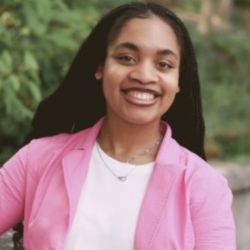
When she arrived at Fisher, Matthews was accepted into the Pathways to Supply Chain Program which introduces students to real-world experiences, industry connections and applied learning in logistics and operations.
“When I was in the Pathways program, I just fell in love with supply chain operations because it involved everything,” she said. “It's like the glue to finance, logistics, human resources and sales. It's all of it.”
“I love to bake, and I want to own my own restaurant and bakery someday, so going to business school and into operations is helping me figure out how to do that. But hospitality is about serving people and it's what makes a business a business. I want to connect with people, and I do that through food.”
That desire for connection is what drew her to Cameron Mitchell Premier Events, a full-service catering company in Columbus.
Matthews worked at Cameron Mitchell Restaurants during her senior year of high school and loved it. When an opening for a prep/event cook opened up in April, she jumped at the chance to experience the behind-the-scenes operations of a catering business up close and personal.
“Cameron Mitchell has this phrase, ‘Yes is the answer,’” she said. “It's about making sure that the customer is satisfied at every point. The company takes care of the employees, the employees take care of the guests and the guests in turn take care of the business. It's full circle.”
As a prep/event cook she was part of a team that made sure catered events ran smoothly.
“For example, for a wedding we made a lot of crostini hors d’oeuvres with different sauces, tomatoes, fish and garnish,” she said. “I helped cut the garnishes and crostini, prepped all of the individual components and laid them out to make it easier for the event team to assemble them. The prep team’s job is to make the event team’s job easier.”
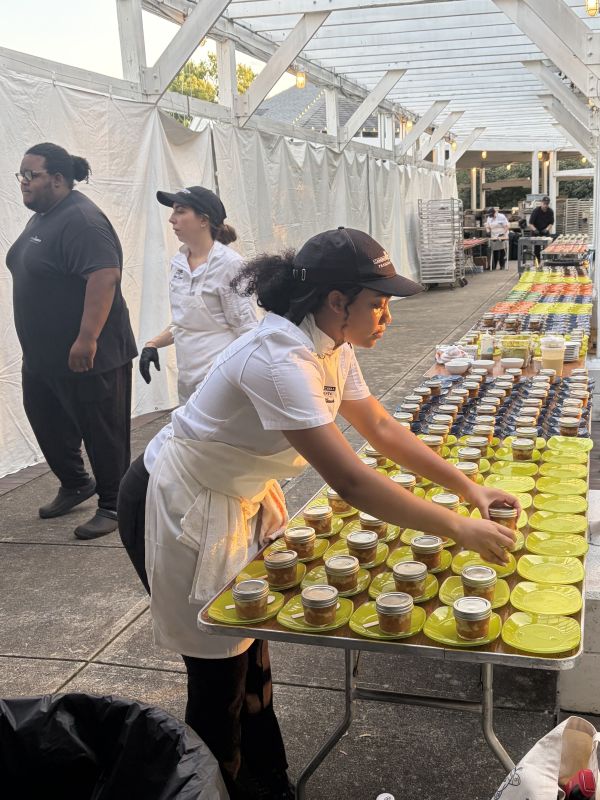
In preparing the food, she witnessed and learned a lot about the operations of the catering industry.
“There’s a whole set of procedures that are in place to make sure the operations of an event goes well,” Matthews said.
The company uses a banquet event order (BEO), a master contract and instruction sheet which acts as a primary roadmap for the venue, kitchen, event setup and the service teams involved. The event supervisor reviewed the BEOs and assigned work to each employee and team.
“The things I've learned in hospitality operations are genuinely about efficiency,” Matthews said. “One step needs to be done exactly right because it builds on the next step. Making sure that everything's done right in the kitchen really does help the event at the actual venue go more smoothly.”
Accountability and constructive feedback also help the company streamline workflow.
“They required us to write our initials on the BEO sheet so if something wasn't made the right way, they could give us constructive feedback so we could get better,” Matthews said. “The sign off was to make sure you were following directions and that everything was consistent.”
That consistency ran throughout the process, helping build a cohesiveness among team members that’s necessary for the success of any team or organization.
“Everyone had their own duties, but we truly worked as a team,” Matthews said. “We were cross-trained and had all these skills under our belts, so we were able to help where needed to get the work done more efficiently.”
The role also taught her the importance of time management, meeting deadlines and how to be a good manager.
“I've learned to really be patient with others,” she said. “There was someone who started at the same time as me but was new to the culinary industry. There were things I learned from my hospitality major that I was able to teach her, like how to hold a knife correctly to make julienne slicing easier.”
The team held “pit stops,” where they went over the events for the week and heard from managers about what the team did well, the things they needed to work on and things to remember.
“I really did appreciate that they always came to us in a very respectful way,” she said. “It's helped me to be a mirror of patience and have respect for others. I’ve found this to be a very easy skill to transfer to life as well.”
Beyond the hands-on experience in the kitchen, Matthews also got a behind-the-scenes look at the business operations of the company, including satisfaction metrics, the financial structure of the organization and the profit and loss statements of each event.
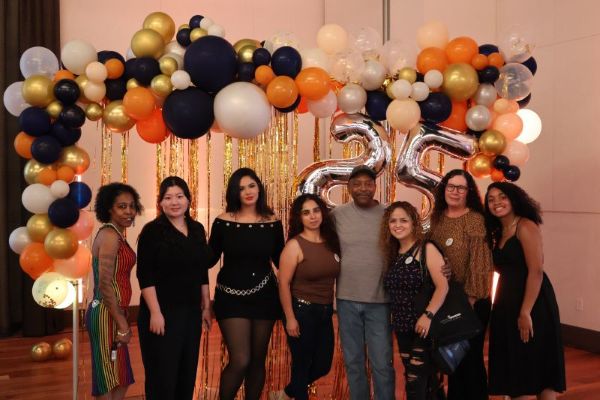
“The statements helped show the positive and negative trends of the revenue made,” she said. “It was interesting to see the profit or loss from every event, including how much they spent on food, the cost to rent out a venue and what they actually made.”
Matthews also shadowed the sales and event coordinators and human resources manager. In the research and development department, she saw how they work closely with the head and executive chefs to figure out new menu items and seasonal dishes.
She said her hands-on, behind the scenes experience really opened her eyes to the career opportunities outside of traditional business paths.
“When I talk to my friends who are accounting or finance majors, I tell them they don’t have to just work at the Big Four,” Matthews said. “There's so many other opportunities to work in logistics, finance and operations in other industries. You can do finance for Ohio State or logistics for a food service company. Those majors are very versatile in any industry.”
During her experience, she applied lessons about employee sheets, labor costs and supply and demand from her business classes and said the catering position helped her bring her two majors into alignment.
“The Cameron Mitchell job helped bring Fisher and the hospitality programs together in my eyes, because I got to see the finance and logistics behind the food service, behind the hospitality,” she said.
“When I was in the Pathways to Supply Chain Program, I just fell in love with supply chain operations because it involved everything. It's like the glue to finance, logistics, human resources and sales. It's all of it."