Converge 2026 empowers leaders to connect, communicate and adapt with intention

By Margaret Farnham
Fisher College of Business
As the director of talent strategy and development for a woman-owned commercial construction company, Erin Colwell looks for ways to connect new and seasoned employees in her organization.
“It’s a field where the employees are either very new, or they have been working in the industry for 15 to 20 years,” Colwell said. “I’m trying to help them understand and embrace their different perspectives.”
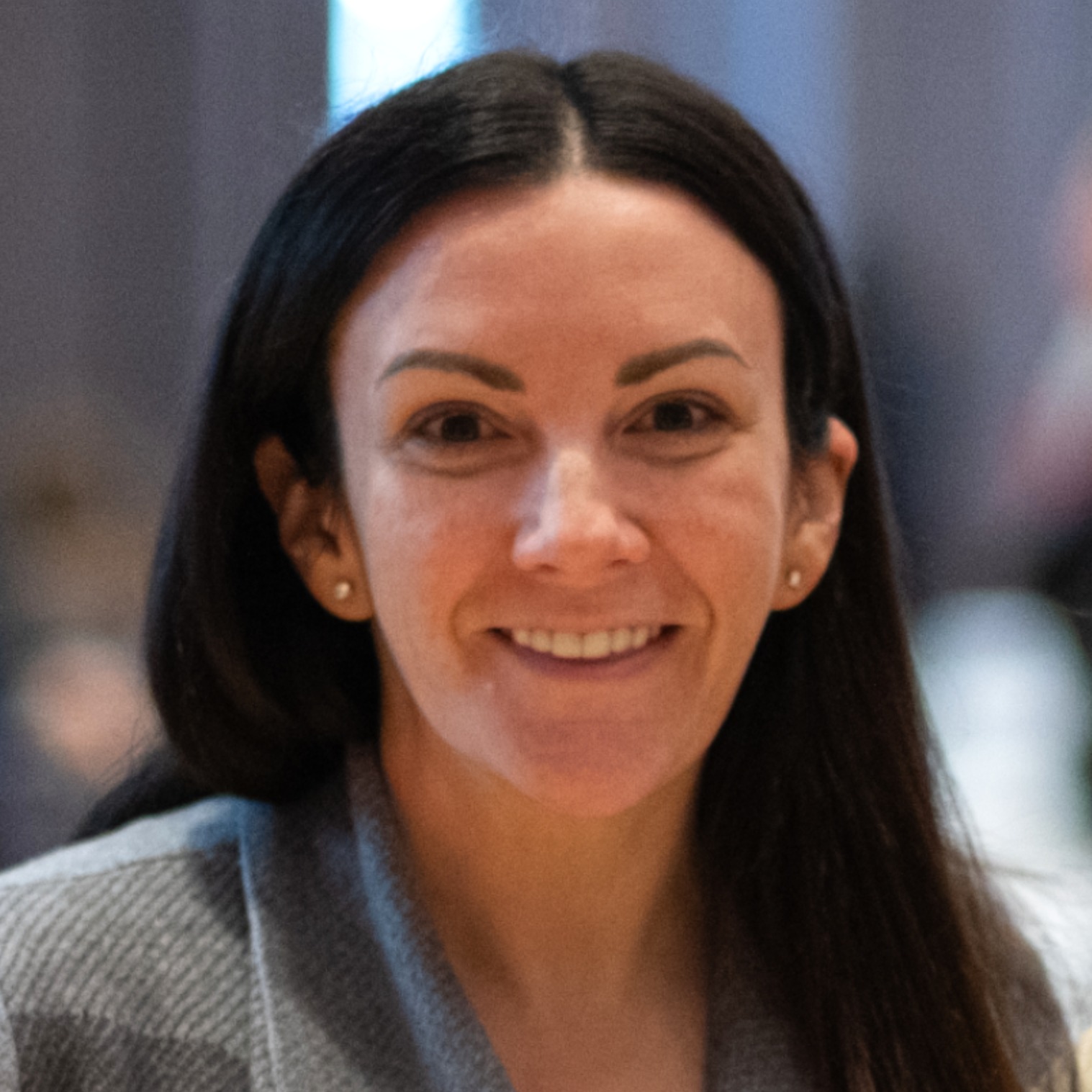
So, when Fisher announced the theme for Converge 2026, “The Power to Adapt,” she saw an opportunity to gain fresh insight and practical strategies.
Colwell (BSBA ’07) joined more than 200 attendees at the inaugural event, a gathering that brought together business leaders, entrepreneurs, students and others interested in unique opportunities for learning, networking and professional growth.
As a human resources professional, Colwell encounters employees who are continually trying to adapt to new ideas and processes.
“Younger people want to know why we do things, while our tenured associates can show them the way,” said Colwell.
Understanding the why in business, working smarter, pivoting in careers and responsibilities with purpose, thriving under pressure and leading with intentionality and transparency were some of the topics addressed throughout the day-long event in the Ohio Union.
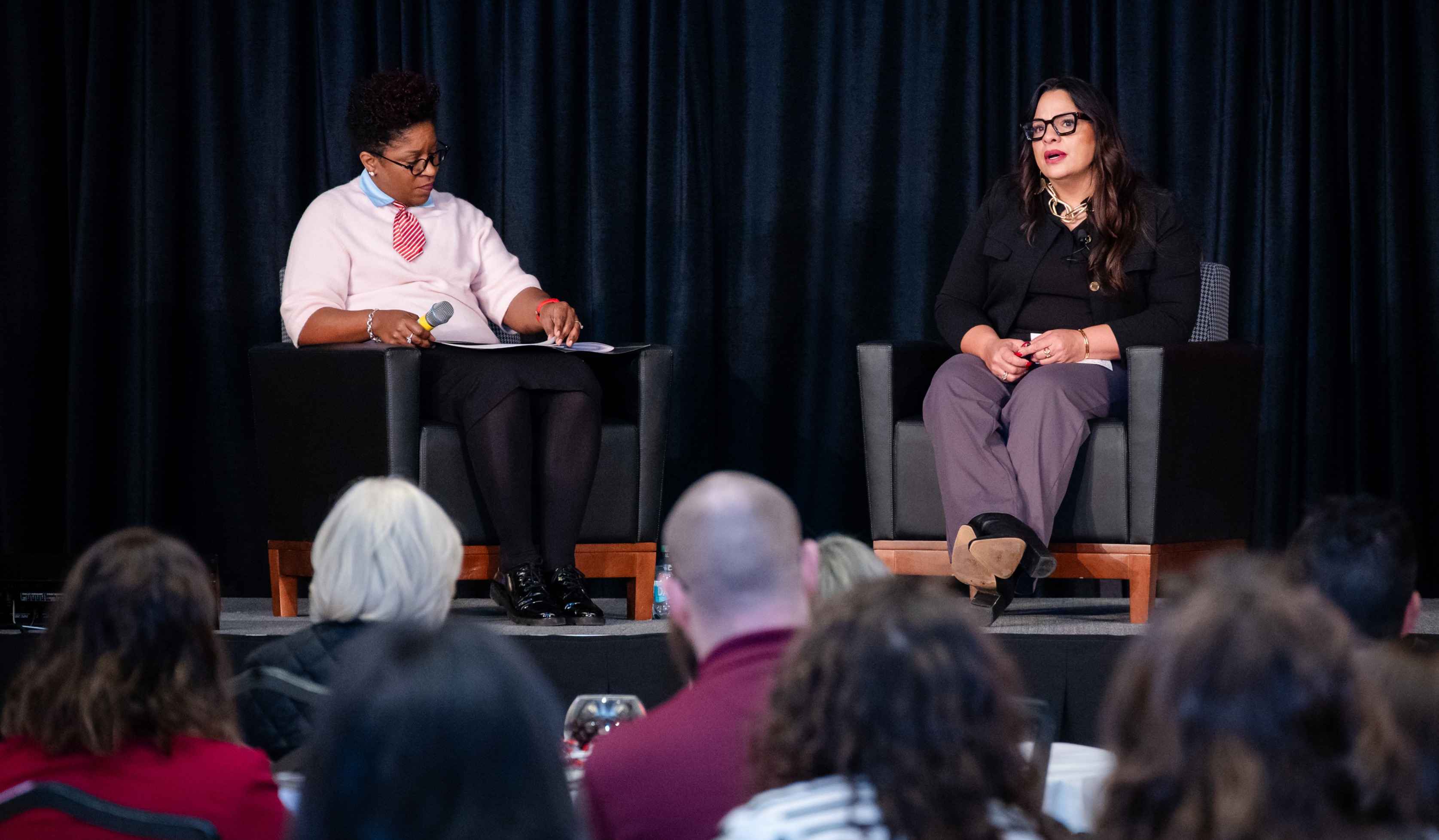
“People want to know the deeper, broader why, and then why this matters in the context of our work every day,” said Elizabeth Martinez, president and CEO of Big Brothers Big Sisters of Central Ohio. “Some of us are comfortable in places of uncertainty, but others may struggle. In those cases, we must work to bring clarity and guidance.”
Martinez spoke about the importance of providing perspective on an organization’s direction and including everyone in the conversation about vision and goals during a session titled “Leading with Clarity” and moderated by Cynthia Turner, associate dean of access and student success.
“There is constantly going to be noise, but if we can anchor back to the purpose and the why, I think that helps us get through the work,” said Martinez, who has been with Big Brothers Big Sisters for 23 years, including 10 as its leader. “For us, it is important to always have a foot in the community, taking the temperature and asking are we accomplishing what we intend to do? And, when we do get distracted, what systems do we have in place to course-correct?”
Adapting often means recalibrating and transforming setbacks into opportunities, a pattern Converge 2026 speaker Jeri Ballard (BSBA ’89) has repeated throughout her career.
In her session, “Turning Setbacks into Stepping Stones,” she shared how she dreamed of playing clarinet for a symphony until she broke her hand. She then turned her attention to becoming an astronaut, until a need for glasses eliminated that option. She came to Ohio State to become an airline pilot, and flew for the Ohio State Flight Team, but her inability to pass the vision portion of a medical exam forced her to abandon her dream of flying for an airline.
“It was time to reinvent,” she said.
Ballard went on to work for Westinghouse Electric, Asea Brown Boveri and eventually Shell, where she was executive vice president of Real Estate, Business Operations Centres and Corporate Travel. She retired in 2025 to become interim CEO at CoreNet Global, a nonprofit association representing nearly 10,000 members in 50 countries with strategic responsibility for the real estate assets of large corporations.
“I had an amazing career and got to do purposeful things,” she said. “It never goes to plan, and how we deal with that is where resilience kicks in.”
She outlined several strategies for handling setbacks, including reframing failures as temporary and necessary for growth, taking small steps to regain momentum and seeking support from family and friends. She also encouraged her audience to focus on what they can control: attitudes, actions and goals, and to let go of those things they can’t: the past, their future and other people.
“You can prepare for the future, but you can’t control it,” she said.
Organizational leaders also can’t control the speed at which AI has entered their professions, but they can adapt when they learn to engage with it by becoming AI-fluent.
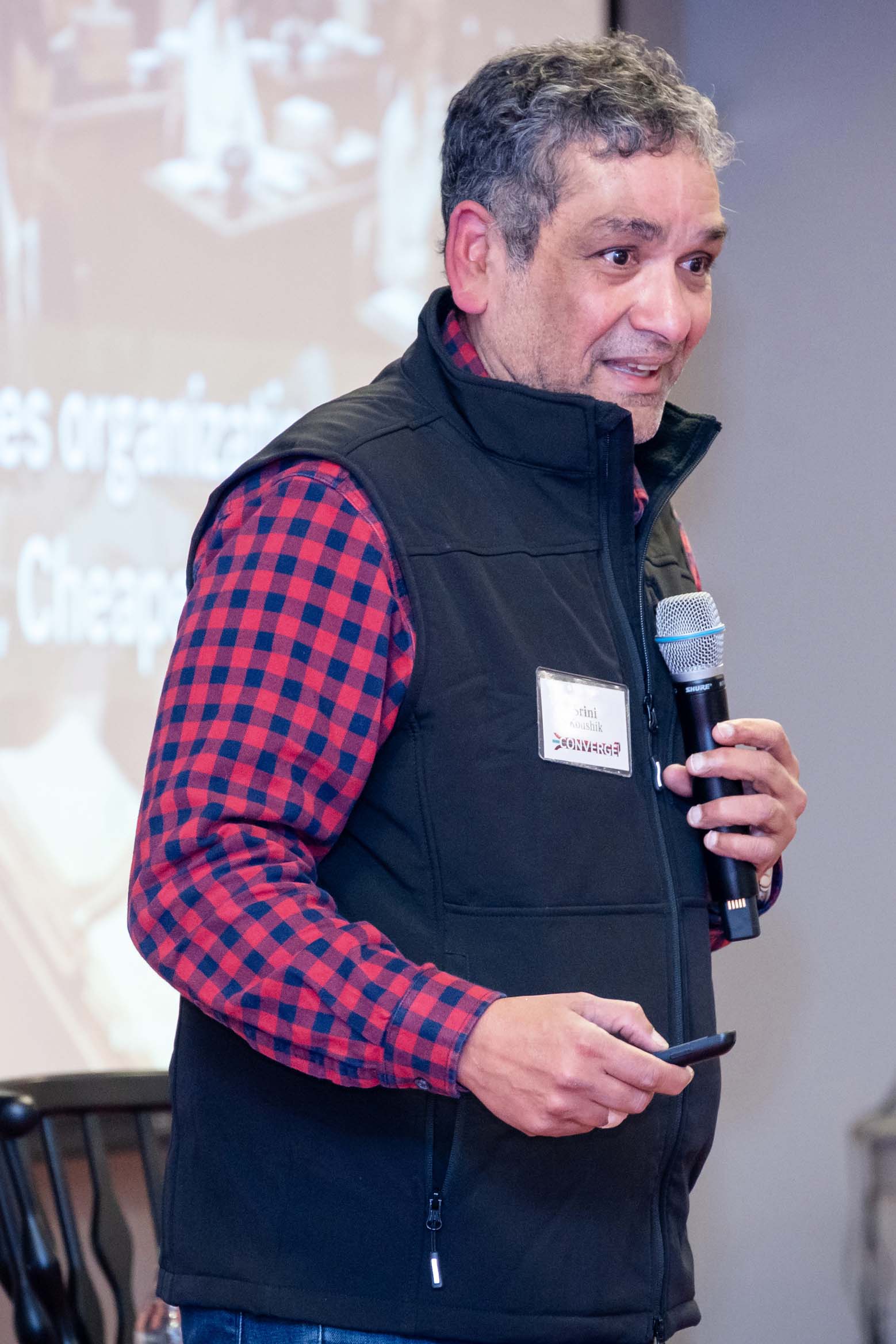
Srini Koushik (MBA ’94) encouraged the audience in his session, “Working Smarter: The Human-AI Intersection,” to prepare for the lightning-speed advancement of AI by learning it like another language.
“The biggest mistake that individuals and organizations are making is to think about AI as another technology,” he said. “For the first time, we have invented something that can think and do.”
Koushik is the academic director for non-degree AI programs at Fisher and the CEO of Right Brain Labs. With more than 35 years of C-level executive experience leading AI innovation at Fortune 500 organizations, he said AI is now advancing every two to three months.
“If you’ve been using ChatGPT the last year and a half and think ‘I’m good,’ you’re not,” he said. “They just rolled out something new today.”
He encouraged those in attendance not to fear AI, but to treat it as a thought partner.
"Don’t ask it for an answer,” he said. “Have a conversation with it.”
Other breakout sessions at Converge included:
- “Thriving Under Pressure” with speaker Nancy Kramer, chief evangelist for IBM consulting, and moderator Benjamin Campbell, professor of management and human resources at Fisher.
- “Design Thinking in Action” led by serial innovator Nancy Dawes and moderator Whitney Mantonya (BSBA ’90), senior lecturer in operations and business analytics.
- “Learning to Invest with Confidence” with speaker Kathy Kahn (BSBA ’90), financial advisor with New Albany Wealth Management at Morgan Stanley, and moderator Matt Sheridan, senior lecturer in finance.
- “Pivot with Purpose” featuring Jeffrey Voorhees (MBA ’15), vice president of Technology Strategy and Innovation at TruStage.
Voorhees told his audience that people who successfully navigate a career change do three things well: they’re self-aware and know their strengths, they learn the language of the career they’re seeking, and they don’t look back.
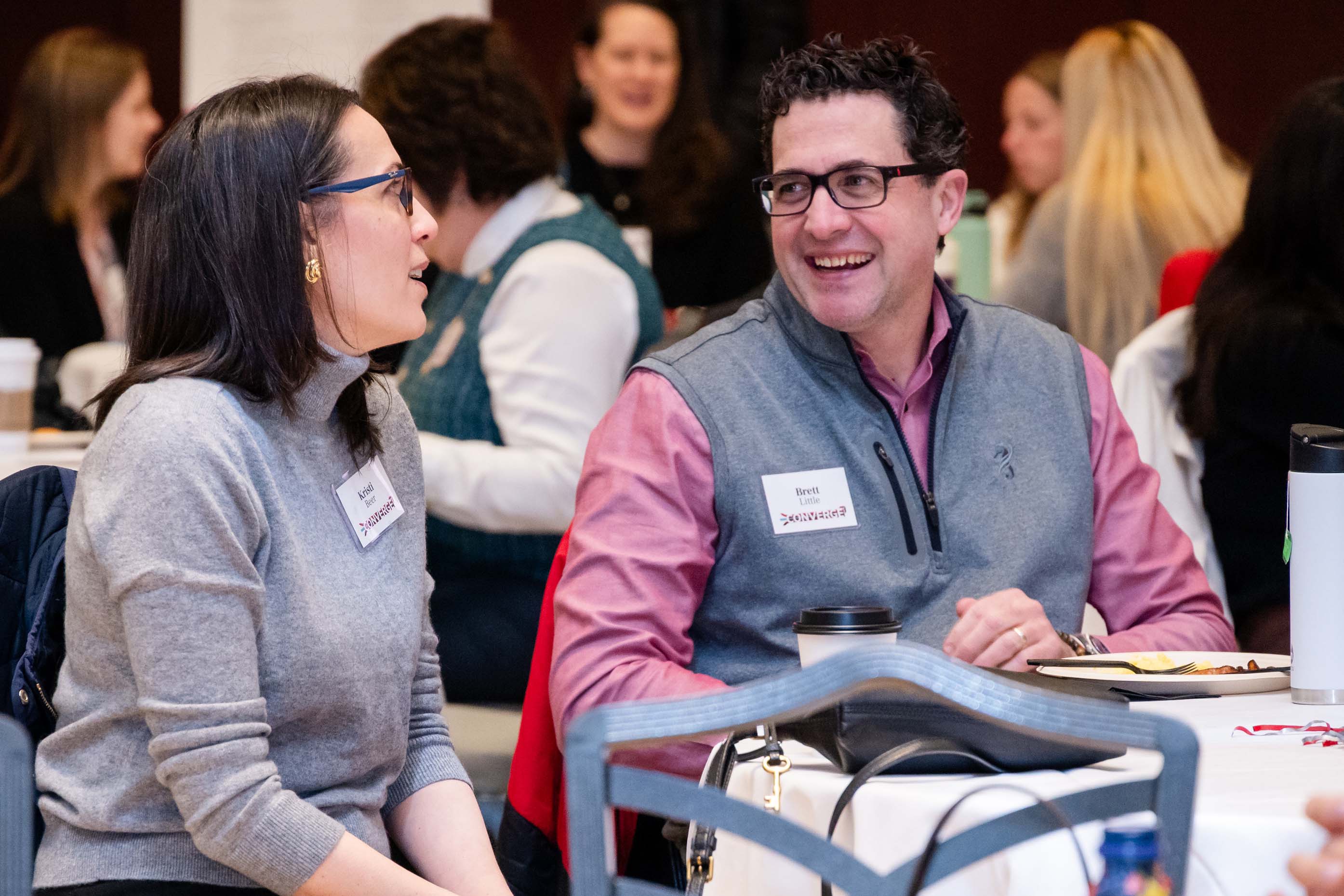
His words resonated with Brett Little, of Cincinnati, who took note of Voorhees’ lesson about language.
After 25 years in marketing and communications roles for insurance and financial services companies, Little (BSBA ’01) wants to pivot into higher education and student services, an area of great interest but a language he still needs to master.
He saw Converge as an opportunity to return to his alma mater, network with other professionals and gain momentum for the transition into a new profession.
Mark Brahm, a property portfolio manager for Cortland, attended Converge with several colleagues as a team-building exercise. They regularly attend Fisher conferences as they look for ways to grow as leaders.
“Experiences like this serve as a powerful reminder that leadership development is never finished,” said Brahm, who graduated from Ohio State in 2012 with a degree in international relations and national security studies. “A major takeaway for us was about the need to be clear about expectations with yourself and your team. As managers and leaders, we are interpreting the vision of our company leaders down to our team. We have to be clear in that translation, otherwise, it will get distorted and we won’t be able to achieve maximum efficiency and the ultimate vision.”
Leadership is rooted in story, said Angus Fletcher in the conference’s opening session, “Micro-Connections — Influence in Action.”
“Another word for story is plot; another word for plot is plan, and plans make a future,” he said. “What a leader is constantly doing is imagining plans for the future.”
Fletcher, professor of story science and co-director of the Fisher Leadership Institute, invited attendees to share their stories, listen and learn from one another and help young leaders lean into their own unique stories.
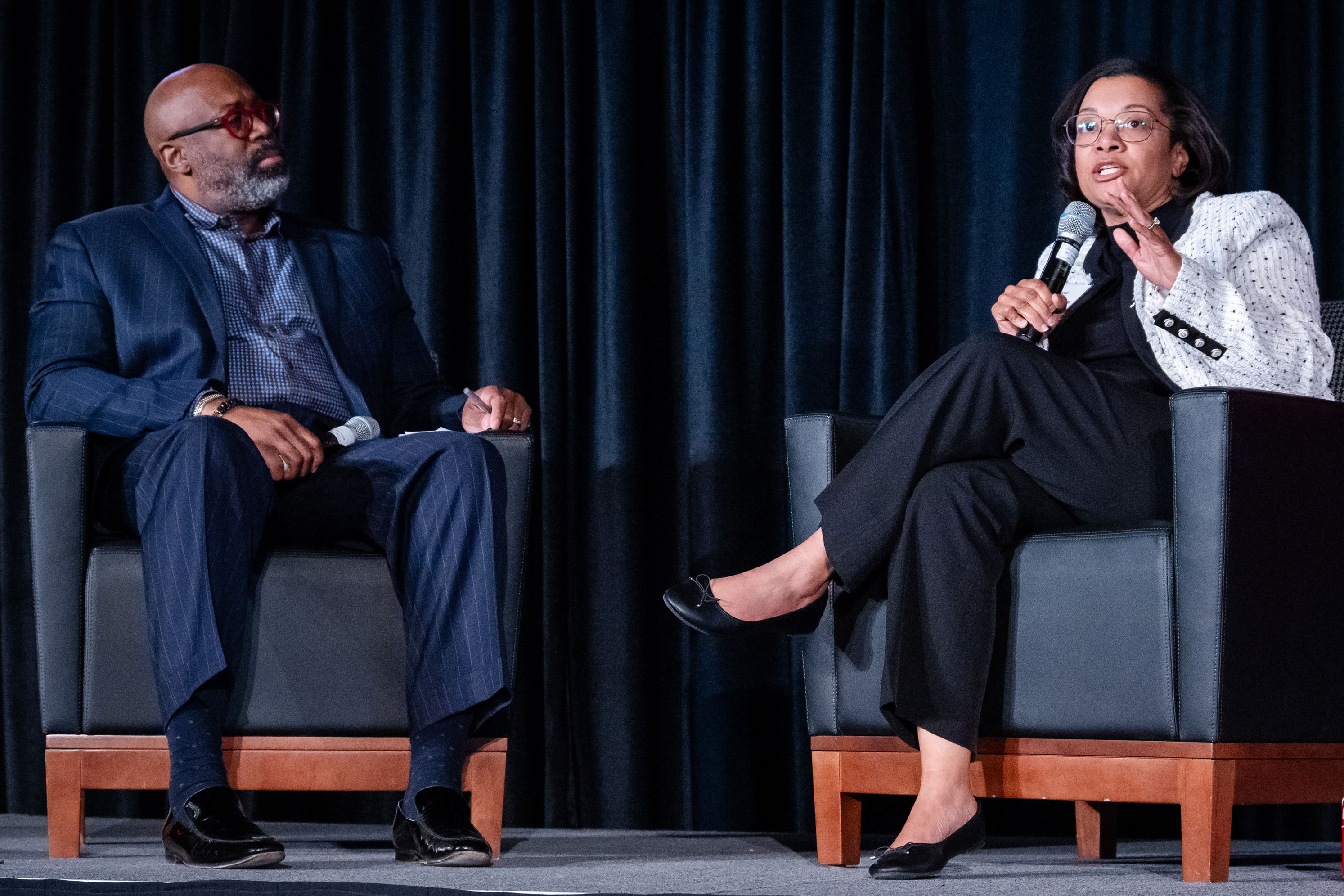
Other featured speakers included Chris Phillips (BSBA ’97), vice president and general manager of Geo and Education at Google, who spoke about creating a collaborative culture with moderator Jen Knox Shanahan, academic programs manager for the Fisher Leadership Initiative.
Jana Croom (MBA ’03), chief financial officer for Kimball Electronics, closed the day with insights about the power to adapt.
“At the most base level, adaptability is important scientifically because of evolution,” she said. “If you don’t adapt, you die. That is just the brass tacks reality of it. Your environment is not fixed, and so you can’t be either.”
In a conversation moderated by Terry Esper, professor of logistics at Fisher, Croom spoke about the difference between adaptability and agreeability; about the need to slow down long enough to think strategically, which increases the ability to adapt; and about the key indicator that someone has the power to adapt ― curiosity.
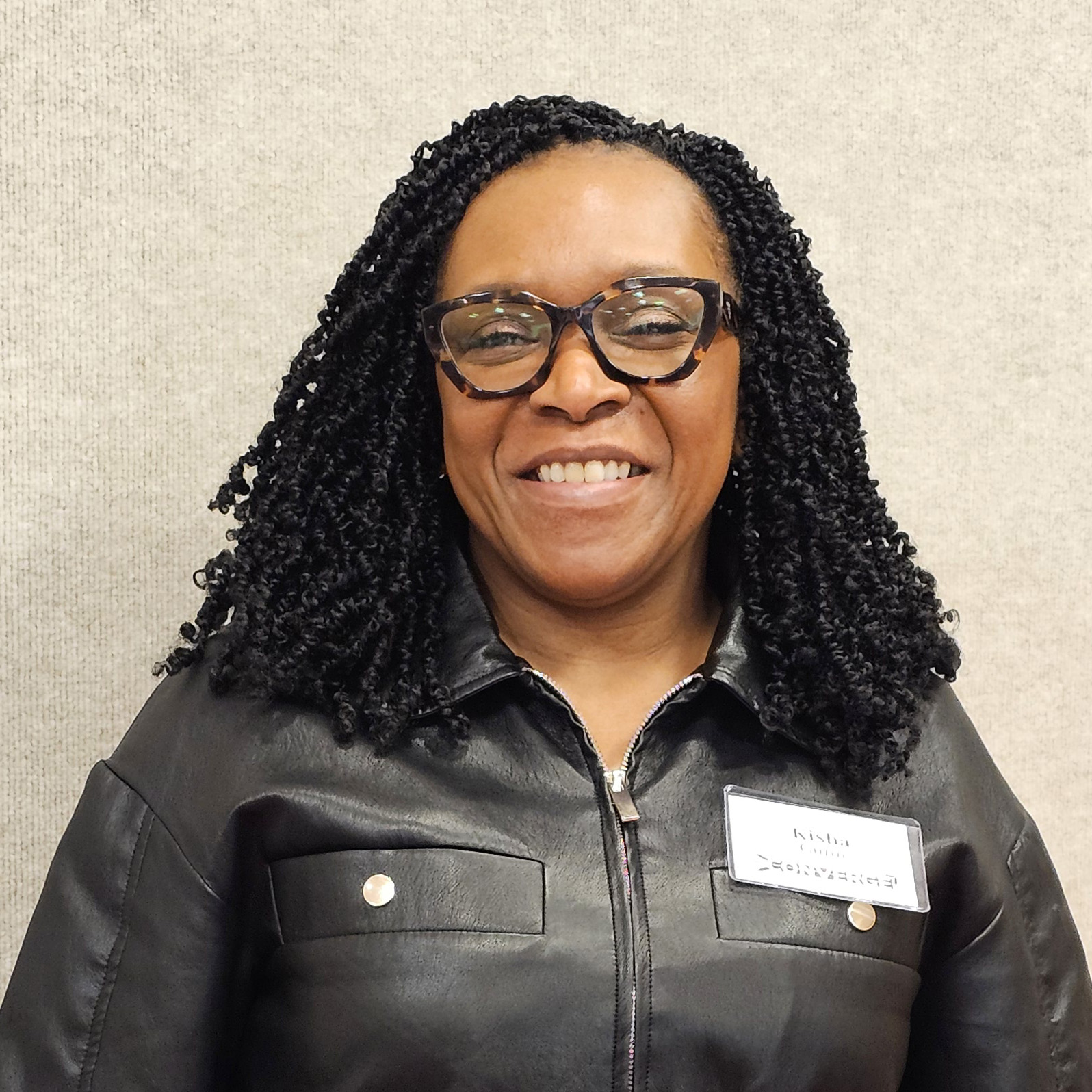
“The conference reinforced that effective leadership isn’t about having all the answers, but about creating space for collaboration and growth while remaining flexible,” said Kisha Gunn, manager of rehabilitation services at Ohio State Harding Hospital. “One takeaway I plan to incorporate as a leader is to be more intentional about pausing before reacting, taking time to listen, reflect and adapt my approach based on the needs of the individual and the situation.”
Gunn is approaching her second year as the manager in a department where she spent the previous seven years as an employee. As a result of her new role, she was drawn to the conference sessions about adapting and leading with clarity.
Their emphasis on communication, transparency and creating psychological safety resonated with her as she lives into her role as leader.
“I appreciated the opportunity to think more intentionally about leadership, adaptability and how to show up for my team, especially during times of change,” she said. “I was reminded that adaptability is a strength that can be modeled when leaders demonstrate it, giving teams permission to do the same.”
Hover over the photo below to view the Converge 2026 photo gallery.

“Experiences like this serve as a powerful reminder that leadership development is never finished."