Fisher Research and Insights Forefront
July 10, 2026
CNBC
CNBC
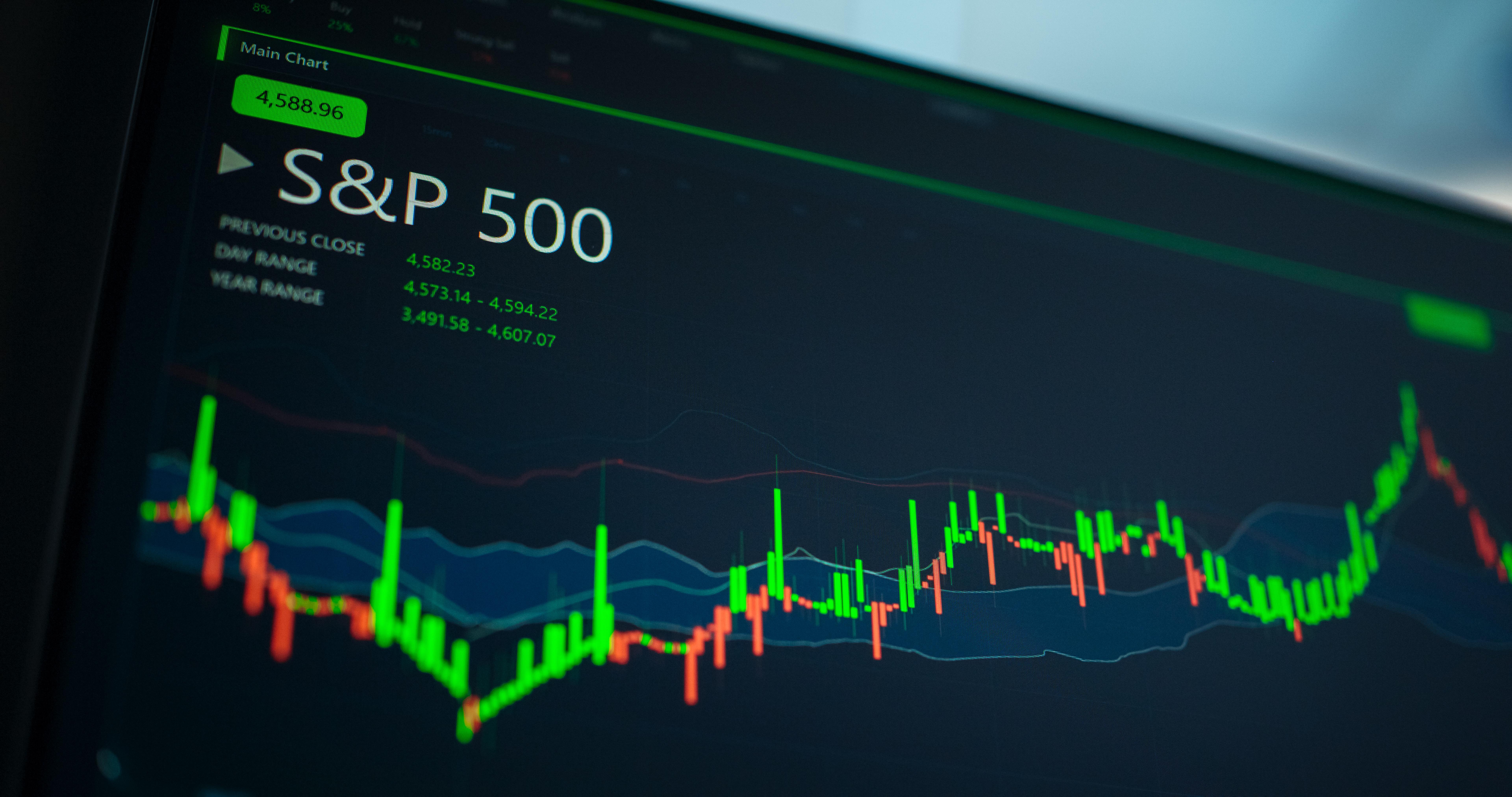
The stock market looks pretty cheap based on future earnings expectations. Don't be fooled
The S&P 500 trades around 28x trailing earnings versus 21x forward earnings. Experts such as Fisher's Itzhak Ben-David, the Neil Klatskin Chair in Finance and Real Estate, say the spread mostly reflects high earnings expectations.

June 18, 2026
Bayes Business School
Bayes Business School
M&A researchers reflect on turbulent policy environment
René Stulz, the Everett D. Reese Chair of Banking and Monetary Economics, recently was honored for his lifetime of achievement at the Bayes Business School’s annual M&A research conference.
June 5, 2026
Financial Times
Financial Times
The big backlash over plans to drop U.S. quarterly reporting demands
A new proposal that would allow U.S. public companies to do away with reporting quarterly earnings is drawing overwhelmingly negative feedback from investors, according to a tool created by Tzachi Zach, chair of Fisher's Department of Accounting and MIS, that tracks comments about the proposal.
May 15, 2026
The Dispatch
The Dispatch
Short selling on trial
Itzhak Ben-David, the Neil Klatskin Chair in Finance and Real Estate, provides some context about short selling as a way to maintain a check on markets.
April 20, 2026
Harvard Law School Forum on Corporate Governance
Harvard Law School Forum on Corporate Governance
The (missing) relation between acquisition announcement returns and value creation
New research by Itzhak Ben-David, the Neil Klatskin Chair in Finance and Real Estate at Fisher, looks at the stock market’s snap reaction to an acquisition announcement, known as cumulative abnormal return (CAR). The research shows that CAR does not actually measure value creation, and that the market’s initial reaction to a deal bears essentially no relation to how that deal actually turns out.

January 15, 2026
The Rational Reminder Podcast
The Rational Reminder Podcast
The rise of ETF slop
Research co-authored by Itzhak Ben-David, the Neil Klatskin Chair in Finance and Real Estate, helps explain "ETF slop," the explosion of complex, high-fee, behaviorally engineered ETFs that are designed to attract assets rather than improve investor outcomes ― and why they're not always the best investment vehicles.
November 25, 2025
The Ohio State University
The Ohio State University
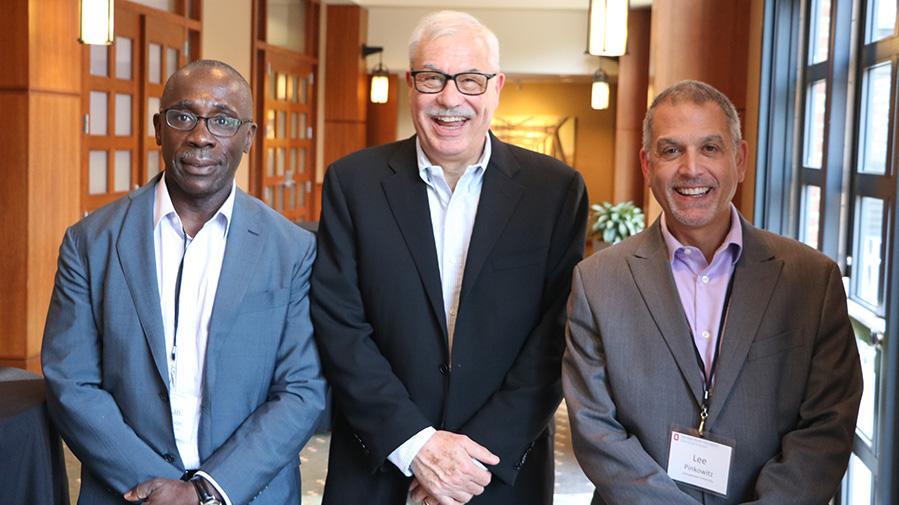
Sharpening generations of legal and business minds
From business to law, the Reese family's support of The Ohio State University is boundless. Learn more about their impact and how Fisher faculty member René Stulz is upholding this strong tradition through his work as a world-renowned finance scholar.
September 15, 2025
MarketWatch
MarketWatch
Private equity in your 401(k): Who is the big winner? Probably not you.
A recent study of the investment performance of individuals who had invested in private-equity funds found that, if anyone made out like a bandit from this industry, it was the investors who were already rich. The study, co-authored by Assistant Professor of Finance Petra Vokata, found that these individuals either got into the best funds, or they had the best advisers, or both.
August 18, 2025
MarketWatch
MarketWatch
Is Nvidia a Republican or a Democrat? These political ETFs have voted.
ETFs that combine investing and politics are tapping into investors’ polarized views. But should they get your vote? Research by Itzhak Ben-David, the Neil Klatskin Chair in Finance and Real Estate, says no. Ben-David suspects that specialty ETFs focus on narrow investment themes such as politically niche offerings primarily for marketing purposes to justify their high expense ratios.

June 4, 2025
Barron's
Barron's
The best way to respond to a geopolitical crisis
Working research from Fisher's Andrei Gonçalves, Alessandro Melone and Andrea Ricciardi is offering investors better insights on how to respond to geopolitical crises, such as war and military conflict.

April 2, 2025
Financial Times
Financial Times
The hidden cost of predictable investment rebalancing
New research from Fisher's Alessandro Melone and his colleagues supports the long-held belief that portfolio rebalancing has become so predictable — and the resulting flows so gargantuan — that hedge funds and prop trading firms can profitably front-run these regular rebalancing flows.

April 1, 2025
MarketWatch
MarketWatch
BlackRock’s Larry Fink says to own alternative assets. But timing is everything.
Research by Finance Professor Itzhak Ben-David details the ebbs and flows of the investor sentiment cycle is crucial to understanding when investment firms such as BlackRock launch narrowly focused and more expensive products.

March 24, 2025
Barron's
Barron's
Front-running target-date funds for fun and profit
Many target date funds rebalance at regular calendar intervals, such as monthly or quarterly, or depending on weight deviation. This knowledge, though, allows Wall Street traders to front-run the rebalancing transactions of these funds, including many pension funds, according to research by Fisher's Alessandro Melone and his colleagues.

March 18, 2025
MarketWatch
MarketWatch
How to win the high-momentum stock game
Momentum stocks have historically beaten the stock market by a large margin — until recently. A study by Finance Professor Itzhak Ben-David and his colleagues found that a driver of the decline is a change that Morningstar instituted in how it calculates mutual funds' star ratings.

February 7, 2025
Financial Times
Financial Times
Front-runners skim gains on U.S. pension fund trades, study finds
Speculators are capitalizing on predictable timing of routine trades that are intended to rebalance large portfolios such as public pension funds in the U.S., according to new research by Alessandro Melone, assistant professor of finance, and his colleagues.

February 5, 2025
Bloomberg
Bloomberg
Duke’s Cam Harvey tallies cost of portfolio rebalancing at $16 billion
A new paper authored by a trio of researchers including Assistant Professor of Finance Alessandro Melone reveals the cost to pension funds and other market participants whose rebalancing activity is scheduled and predictable.

February 3, 2025
Max M. Fisher College of Business
Max M. Fisher College of Business
Portfolio rebalancing and its unintended consequences
Rebalancing is a key tool used by investors to maintain specific portfolio ratios. New research from Fisher’s Alessandro Melone and his colleagues, however, reveals an unintended consequence of rebalancing ― one that costs investors billions of dollars each year.

January 24, 2025
QuantPedia
QuantPedia
It’s about the price of oil, not ESG
New research from Fisher's Shaojun Zhang and a colleague finds that fluctuations in demand for oil is a key driver of movement of so-called "greeniums," pricing benefits that investors are willing to pay extra or accept lower yields for in exchange for sustainable impact.

January 16, 2025
Index Fund Advisors
Index Fund Advisors
Beware fund companies gaming the ratings system
Research from Fisher's Itzhak Ben-David helps illustrate part of the growing focus on mutual fund ratings, which may not be accurate ways to evaluate a fund's performance.

December 22, 2024
Bloomberg
Bloomberg
‘God Bless America’ fund beats political rivals with 33% gain
Despite the strong showing of politically-themed ETFs, finance researcher Itzhak Ben-David says thematic ETFs usually underperform. His research that shows specialized ETFs tend to trail market benchmarks by about 30% over five years.

December 4, 2024
Max M. Fisher College of Business
Max M. Fisher College of Business
Research: Understanding the cost of going green
A new study from Assistant Professor of Finance Shaojun Zhang looks at decisions by companies to adopt environmentally friendly business practices ― and the impact of these practices on shareholder value and market performance.

December 3, 2024
Swedish House of Finance
Swedish House of Finance
Demystifying ETFs: Trends, risks and their market impact
Finance Professor Itzhak Ben-David spoke with the Swedish House of Finance to discuss exchange-traded funds (ETFs), including their growing popularity, the risks of specialized ETFs, how they increase price volatility and market-wide impacts, and what’s next for the ETF space.
September 30, 2024
Alpha Architect
Alpha Architect
Analysts set price targets using trailing P/E ratios
An analysis of a recent research paper from Finance Professor Itzhak Ben-David has important takeaways for investment professionals and finance academics, including: more emphasis by investors on multiples and short-term forecasts of earning and less on expected long term growth of earning and required rates of return. For academics, research must recognize and account for the differential between financial market behavior in theory and the real world.

September 1, 2024
The Wall Street Journal
The Wall Street Journal
How to lose money on the world’s most popular investment theme
Thematic ETFs can be a minefield for investors, and Professor Itzhak Ben-David's recent insights provide a timely warning. His research highlights the pitfalls of specialized ETFs (including real estate ETFs), which often lose 6% annually in their early years, as they are launched in response to investor over-excitement.

August 21, 2024
Financial Post
Financial Post
Canada’s big pensions are ready for airport privatization. Are Canadians?
Institutional backers have reaped rewards while bringing funding and efficiency to some of the world's biggest airports, but not in this country. Now, that may be about to change. Research by Finance Professor Michael Weisbach shows that privatization of airports can lead to positive changes without sacrifices to safety.