AI in Business Conference
Oct. 14-16, 2026 | Columbus, Ohio
The AI in Business Conference, hosted at The Blackwell Inn and Pfahl Conference Center, brings together business practitioners and academic researchers to examine how AI is reshaping industries, institutions and the people within them.
This year's expanded 2.5-day program bridges industry practice and academic research. The conference opens with industry sessions and transitions to academic research, with Thursday bringing both tracks together.
Oct. 14–15 (Wed–Thu): Industry and Practitioner Track | Oct. 15–16 (Thu–Fri): Academic Research Track
This year's theme, AI Innovation at Scale, is a call for shared learning that goes beyond the hype and helps achieve AI readiness. Organizations that scale AI well do so because they have built the right foundations: grounded data, governed risk and the organizational maturity to move deliberately rather than just fast.
Events include industry presentations and practitioner-led panels offering real-world insight into deploying AI enterprise-wide from marketing and finance to operations and HR. The academic track features presentations and poster sessions of cutting-edge empirical, analytical and theoretical research.
Whether you work in industry or research, the conference is an opportunity to test ideas, make connections and engage with the people and organizations shaping how AI gets built and deployed in practice.
Conference Registration
Practitioners
Register for the Full Conference (Oct. 14-16)
Register for the Industry and Practitioner Track Only (Oct.14-15)
Academics
Register for the Full Conference (Oct.14-16)
Register for the Academic Track Only (Oct. 15-16)
PhD Students
Register for the Full Conference (Oct. 14-16)
2026 Agenda
Wednesday, Oct. 14, 2026: Industry and Practitioner Program
| Time | Session | Location |
|---|---|---|
| 8-9 a.m. | Registration and Breakfast | Blackwell Upstairs Lobby |
| 9-10:15 a.m. | Breakout Sessions I | Pfahl Hall |
| 10:15-10:30 a.m. | Coffee Break | — |
| 10:30-10:45 a.m. | Welcome | Blackwell Ballroom |
| 10:45-11:30 a.m. | Keynote: Chris Berry, OhioX | Blackwell Ballroom |
| 11:30 a.m.-12:30 p.m. | Lunch | Blackwell Ballroom |
| 12:30-12:45 p.m. | Break | — |
| 12:45-2 p.m. | Breakout Sessions II | Pfahl Hall |
| 2-3 p.m. | Panel/Fireside Chat | Blackwell Ballroom |
| 3-3:15 p.m. | Coffee Break | — |
| 3:15-4:30 p.m. | Keynote: Tinglong Dai, Johns Hopkins University | Blackwell Ballroom |
Thursday, Oct. 15, 2026: Industry and Academic Program
| Time | Session | Location |
|---|---|---|
| 8-9 a.m. | Registration and Breakfast | Blackwell Upstairs Lobby |
| 9-9:15 a.m. | Welcome | Blackwell Ballroom |
| 9:15-10 a.m. | Keynote: Jojy Mathew, Data Modal AI | Blackwell Ballroom |
| 10-10:15 a.m. | Coffee Break | — |
| 10:15-11:30 a.m. | Breakout Sessions I | Pfahl Hall |
| 11:30 a.m.-12:30 p.m. | Lunch | Blackwell Ballroom |
| 12:30-12:45 p.m. | Break | — |
| 12:45-2 p.m. | Breakout Sessions II | Pfahl Hall |
| 2-2:15 p.m. | Coffee Break | — |
| 2:15-3 p.m. | Keynote: Param Vir Singh, Carnegie Mellon University | Blackwell Ballroom |
| 3-3:15 p.m. | Break | — |
| 3:15-4:30 p.m. | Breakout Sessions III | Pfahl Hall |
| 5:30 p.m. | Transportation to Evening Reception begins | Blackwell Valet |
| 6-9 p.m. | Evening Networking Reception | Rev 1 Ventures |
| 7:30 p.m. | Return transportation begins | Rev 1 Ventures |
Friday, Oct. 16, 2026: Academic and Research Program
| Time | Session | Location |
|---|---|---|
| 8-9 a.m. | Registration and Breakfast | Blackwell Upstairs Lobby |
| 9-10 a.m. | Breakout Sessions I | Pfahl Hall |
| 10-10:15 a.m. | Coffee Break | — |
| 10:15-11:30 a.m. | Breakout Sessions II | Pfahl Hall |
| 11:30 a.m.-12:30 p.m. | Lunch, Awards and Conference Closing | Blackwell Ballroom |
Keynote Speakers
Oct. 14, 2026
Chris Berry
Founder, President and CEO
OhioX
Founder, President and CEO
OhioX

Chris Berry leads OhioX, a statewide nonprofit dedicated to building Ohio into a hub for technology and innovation.
Under Chris’s leadership, OhioX has grown into a member-based organization that unites leaders from Fortune 500 companies, universities, research institutions, startups and technology companies across the state. OhioX connects Ohio’s tech community, champions the people and companies driving progress, and advocates for policies and partnerships that strengthen the state’s economy.
Through statewide programs, industry convenings, public-private partnerships and storytelling initiatives, Chris and OhioX help elevate Ohio’s standing in the national technology landscape. OhioX also publishes OhioTechNews.com, the organization’s media platform covering the companies, leaders, investments, jobs, events and trends shaping the state’s tech economy.
The organization’s work spans emerging technologies, workforce development, entrepreneurship, corporate innovation and artificial intelligence, alongside ongoing efforts to inspire the next generation of Ohio tech talent.
Before founding OhioX, Chris served as chief of staff and director of communications in the Ohio Treasurer’s office. He began his career on Capitol Hill in Washington, D.C., working for a former Speaker of the House.
Over more than a decade, Chris has built and led high-profile campaigns and initiatives spanning government, public affairs, technology and economic development. His work has been quoted, featured or covered by The Wall Street Journal, CNBC, the Associated Press, FOX Business, Forbes, Fortune and hundreds of other media outlets worldwide.
Tinglong Dai
Bernard T. Ferrari Professor of Business
Johns Hopkins Carey Business School
Bernard T. Ferrari Professor of Business
Johns Hopkins Carey Business School
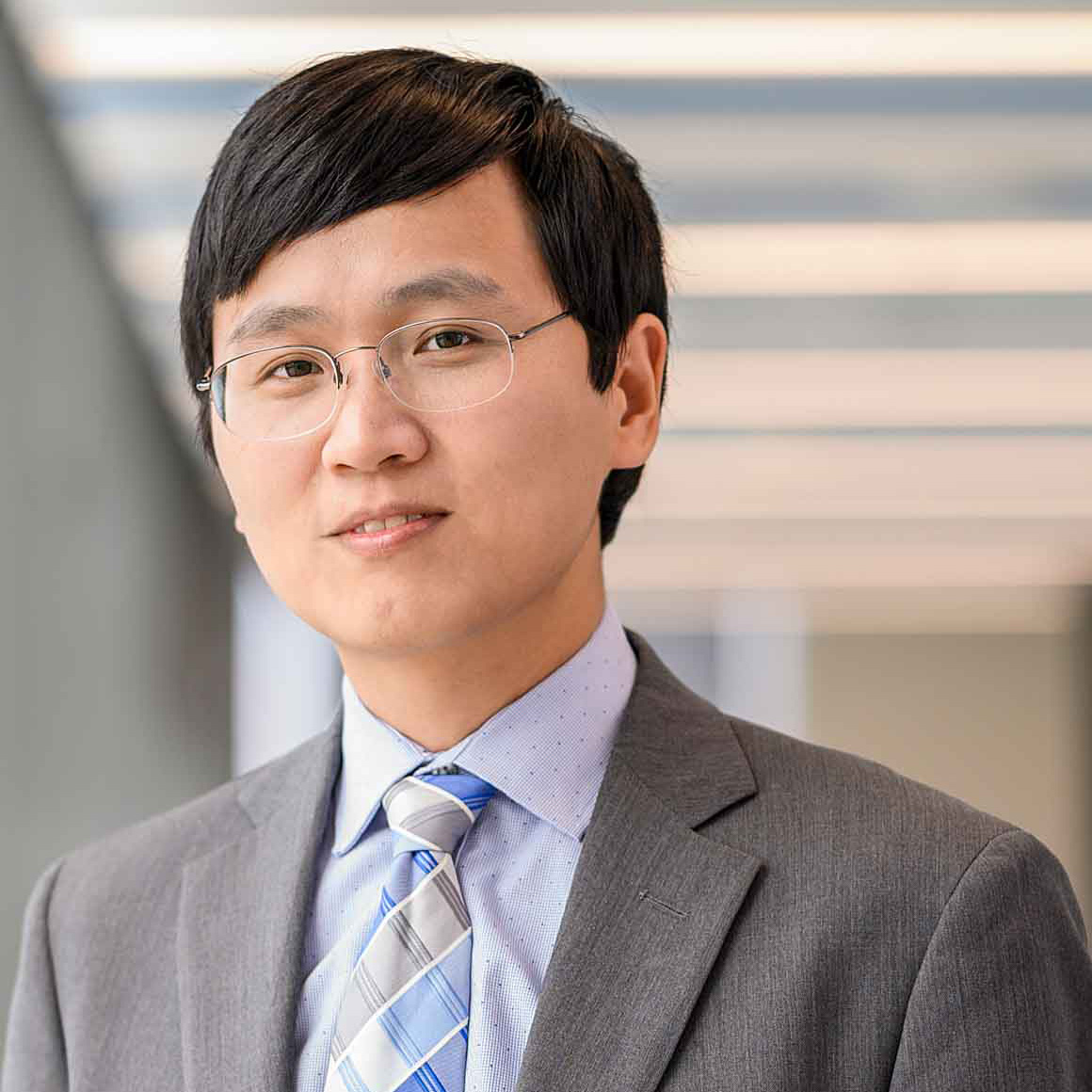
Tinglong Dai is the Bernard T. Ferrari Professor of Business at the Johns Hopkins Carey Business School. He co-chairs the Johns Hopkins Workgroup on AI and Healthcare and co-leads Johns Hopkins’ Bloomberg Distinguished Professorship cluster on medical AI. His work focuses on integrating AI into clinical workflows to improve productivity, access and equity while preserving human judgment, safety and accountability. A vice president at INFORMS, he is founding department editor for AI in operations at Manufacturing & Service Operations Management, associate editor at Management Science, senior editor at Production and Operations Management, and editor at large at npj Digital Medicine. He publishes in premier journals across operations, marketing and medicine and is quoted hundreds of times in outlets including the Associated Press, Bloomberg, CNN, The New York Times, NPR, The Wall Street Journal and The Washington Post, and has appeared on BBC News, CNBC and PBS NewsHour. Poets & Quants named him one of the World's Best 40 Under 40 Business School Professors. He earned his PhD from Carnegie Mellon University in 2013.
Oct. 15, 2026
Jojy Mathew
Founder and CEO
Data Modal AI
Founder and CEO
Data Modal AI
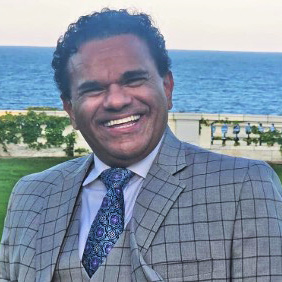
Jojy Mathew is the founder and CEO of DataModal Inc, a next-generation data and AI technology company helping enterprises transform fragmented information into trusted, machine-ready business context. A recognized global leader in data, analytics and artificial intelligence, Jojy advises organizations on building governed data foundations, scaling AI and agentic solutions, and translating emerging technologies into measurable business outcomes.
Before founding DataModal, Jojy was a principal and global financial services data, analytics and AI leader at Deloitte, where he led major data modernization and AI-driven transformation initiatives for global institutions. Previously, at Capgemini, he served as senior vice president and global practice leader for Enterprise Information Management and Strategy Consulting. Drawing on more than three decades of international leadership and technology experience, Jojy brings a distinctive combination of strategic vision, business domain acumen, deep technical expertise and proven execution to the future of enterprise AI.
Param Vir Singh
The Carnegie Bosch Professor of Business Technologies and Marketing
Associate Dean, Research
Tepper School of Business
Carnegie Mellon University
The Carnegie Bosch Professor of Business Technologies and Marketing
Associate Dean, Research
Tepper School of Business
Carnegie Mellon University

Param Vir Singh’s research focuses on how AI and algorithmic systems are transforming markets, shaping consumer trust and influencing platform strategy, pricing and fairness. He is passionate about helping organizations and policymakers understand and navigate the responsible deployment of emerging technologies.
Param leads the Collaborative AI Initiative at CMU — an effort to reimagine business education through generative AI. The initiative is building adaptive, interactive learning environments that mirror real-world complexity and better prepare students for the decisions they’ll face in modern organizations.
His work has been featured in The Wall Street Journal, Financial Times, CNN, Forbes and Bloomberg and has been cited in the U.S. President’s Economic Report to Congress. Param has received the INFORMS Information Systems Society Distinguished Fellow Award, the Don Lehmann Award, the John DC Little Award and he was a finalist for the Don Morrison Long-Term Impact Award.
He has served as director of the PNC Center for Financial Services Innovation, leading a $5.5M renewal of its research program. Param is also a senior editor at Information Systems Research and associate editor at Management Science. He has mentored several PhD students who have gone on to faculty roles at Harvard, NYU, Michigan and other top institutions.
Call for Submissions (now closed)
We welcome proposals from both industry practitioners and academic researchers. Industry professionals are invited to submit proposals for panels and presentations sharing real-world experience with AI in business. Academics are invited to submit abstracts for research presentations and poster sessions.
Topics of interest
We welcome submissions from researchers and practitioners across all business disciplines — from accounting and finance to marketing, operations, HR, organizational behavior, and beyond. Submissions may be interdisciplinary or focus on a single area.
- AI’s impact on business functions, industries and organizational transformation, from operations and supply chains to marketing, finance, HR and enterprise-wide adoption.
- Multi-agent AI systems and human-AI collaboration, including coordination, decision-making, productivity and organizational change.
- AI-driven customer and employee experiences: Personalization, engagement, trust and the boundaries of responsible use.
- AI, sustainability and ESG: How emerging technologies are reshaping environmental, social and governance priorities.
- Building and scaling AI ventures: Innovation, entrepreneurship, implementation and measuring success.
- AI governance, ethics and regulation, including explainability, accountability, fairness, compliance and risk management.
- AI’s influence on strategy and competition: Business model disruption, firm performance and competitive advantage in an AI-native economy.
- AI’s impact on work and society: Labor markets, employee well-being, workforce displacement and reskilling.
- Measuring AI effectiveness: Benchmarking, evaluation, performance metrics and return on investment.
- AI in healthcare, education, and other high-stakes domains: What’s different when the margin for error shrinks?
Review, selection and awards
Submissions will be anonymized and reviewed by a multidisciplinary planning committee. Our goal is to create an engaging, community-based conference experience that highlights rigorous and diverse scholarship while also fostering collaboration, dialogue, and innovation across disciplines and sectors.
Best Paper Awards
- Best Student Paper Award ($1000) ($1,000)
- Best Junior Faculty Paper Award ($1,000)
To be considered, eligible authors must opt-in and submit a full paper (maximum 32 pages) in addition to the conference abstract. Awards are based on review of the written paper and the conference presentation. The first author and presenter must be a PhD student, postdoctoral fellow, or junior faculty at the time of submission
Hotel Accommodations
Preferred accommodations
Conveniently located on Ohio State's campus:
The Blackwell Inn and Pfahl Conference Center
2110 Tuttle Park Place
Columbus, OH 43210
A preferred group rate has been arranged for conference attendees. Early reservations are encouraged, as availability is limited. Reservations should be made by Sunday, September 13, 2026 to receive the group rate. Contact the hotel at 614-247-4000 or blackwellreservations@osu.edu for assistance with booking.
Other hotels around the campus area
- Marriott Columbus OSU
- Fairfield Inn & Suites Columbus OSU
- Holiday Inn Express & Suites Columbus OSU-Medical Center by IHG
- Staybridge Suites Columbus OSU
Parking
Conference attendees may park in the Lane Avenue Garage. For parking validation, bring your garage entrance ticket to the conference registration table.
Lane Avenue Garage
2105 Neil Avenue
Columbus, OH 43210
We look forward to seeing you at the AI in Business Conference at The Ohio State University!