Cullman Symposium explores the human advantage in the age of AI

By Margaret Farnham
Fisher College of Business
People will always be at the center of Alex Anthony’s work as chief administrative officer for the executive search firm BeecherHill.
In supporting searches for C-suite positions and board seats, she sees firsthand the importance of the personal expertise and experience needed for a particular role.
“Because our product is human, keeping the human judgment at the center of everything is incredibly important,” said Anthony (BSBA ’11). “We don’t have AI make candidate selections or hiring decisions, but we’re hoping to automate a lot of time-consuming work that will allow us to focus on building relationships.”
That human-centered approach to implementing AI was at the heart of the recent Cullman Symposium, “Innovating with Intention: Scaling AI with Human-Centricity,” hosted by Fisher and the Center for Innovation Strategies (CIS). It’s also what drew Anthony to the half-day event in the Daley Family Pavilion on campus.
She joined nearly 100 other business professionals, Ohio State faculty, staff and students to hear from faculty, innovators and organizational leaders who research and use AI in their work and organizations.
As CAO, Anthony oversees people, finance and technology, including database management at BeecherHill.
“I personally use AI every day to organize notes, plan my work and poke holes in my thinking as a thought partner,” she said. “As a firm, we use it for workflow automation, database programming, research and developing materials.”
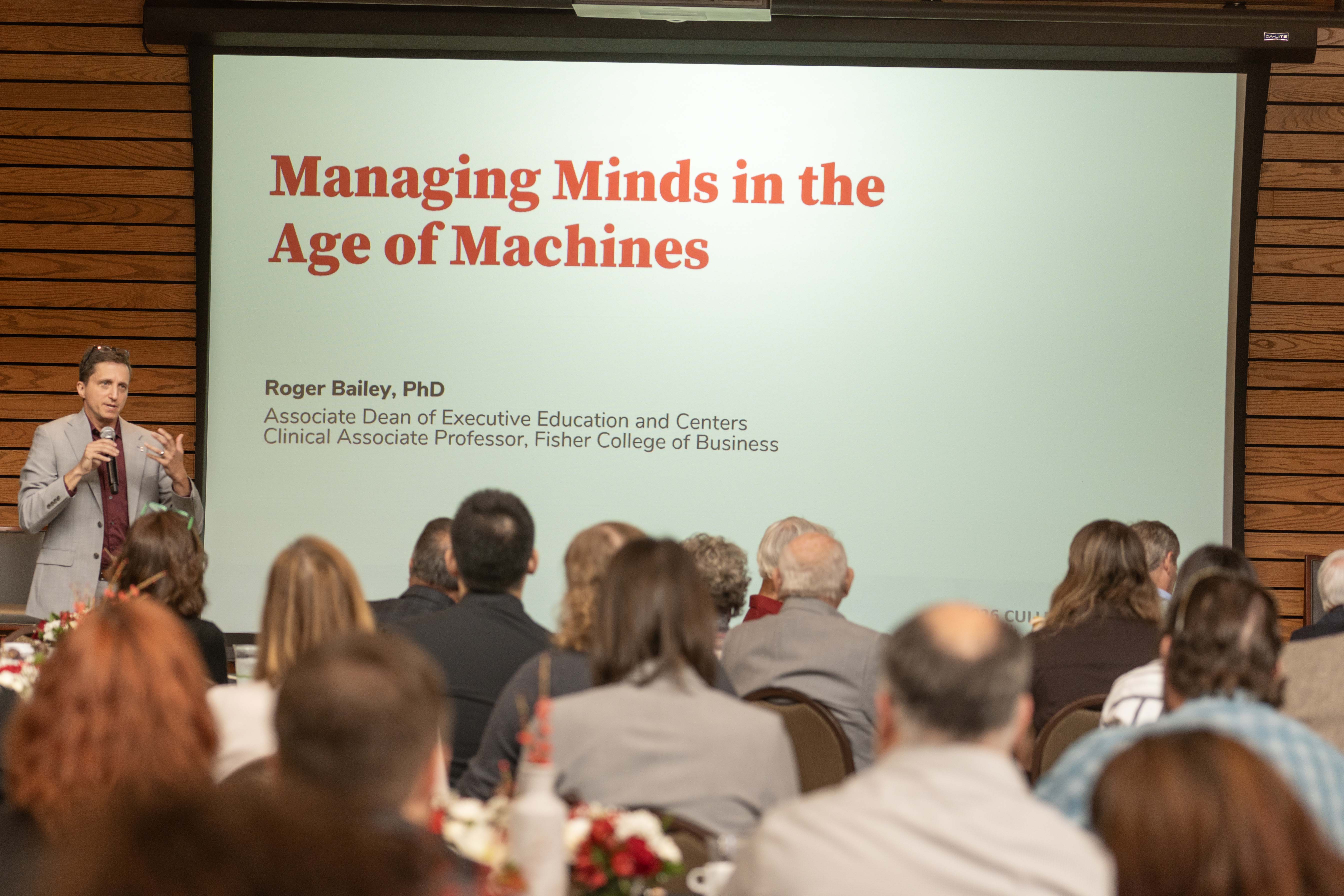
She appreciated Roger Bailey’s keynote presentation, Managing Minds in the Age of Machines, in which he described how AI regresses to the mean or average when presented with a massive data set.
Bailey is the associate dean of executive education and centers and clinical associate professor of marketing at Fisher. He captivated his audience with his discussion about AI’s regression to the mean, and the need for humans to ultimately be “the differentiator” around AI’s response.
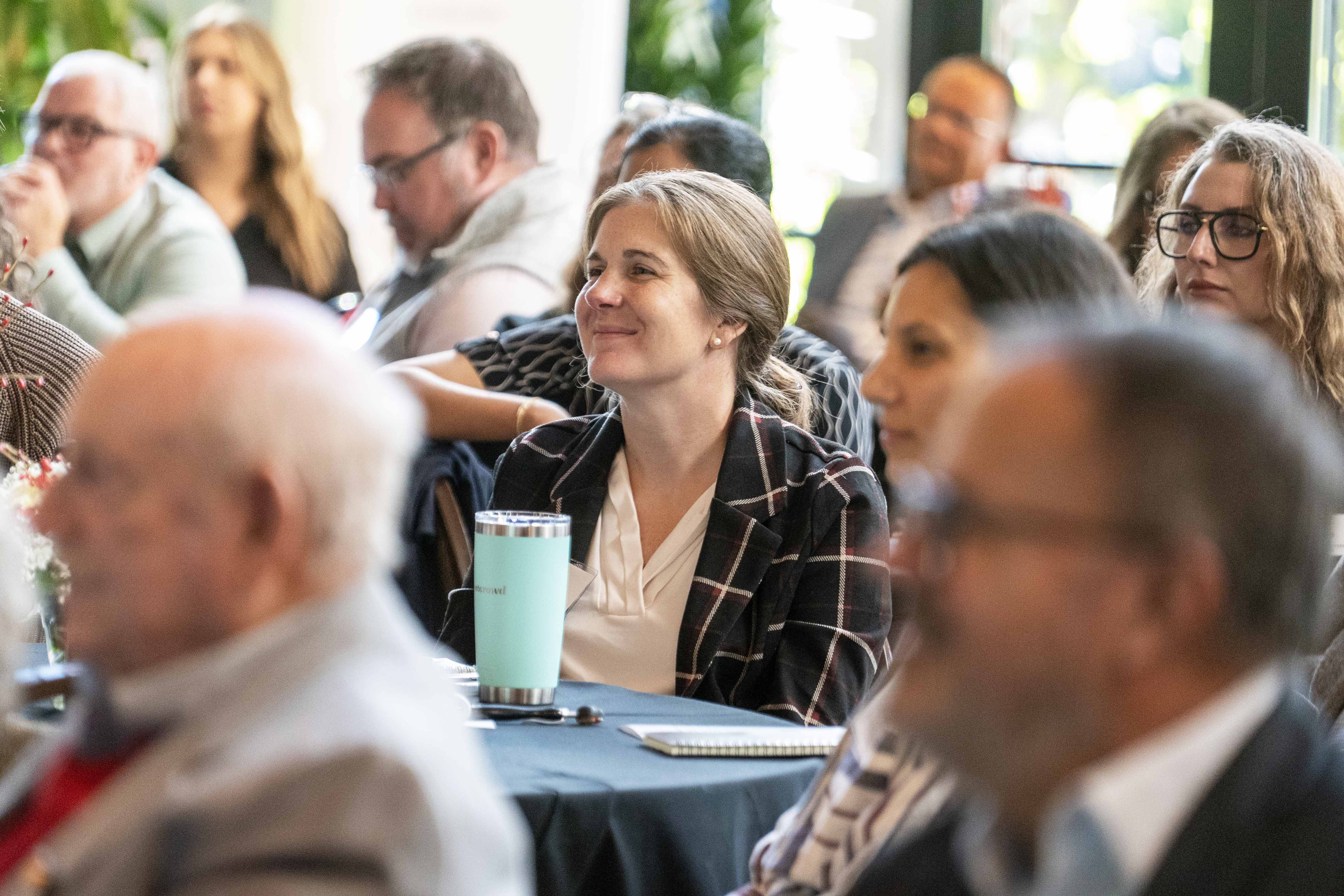
“It was a good reminder that we need to keep stretching ourselves to think independently, always challenge the outputs and be healthy skeptics of the information,” said Anthony.
Micah Fening (BSBA ’04, MBA ’11) also gravitated to Bailey’s explanation about AI’s tendency to produce generic outputs.
“In terms of strategy, where do you want to win and how do you leverage AI for that – that will require going beyond the mean response,” said Fening, innovation product management director at Nationwide.
He directs a team of product managers, marketers, designers, technologists and finance experts to scale new products, channels, processes and business models for Nationwide Financial business units.
“We’ve been using AI for quite some time,” said Fening. “It was good to hear about the risks, what to watch out for and how other companies are using it.”
Fening is particularly interested in AI’s use by companies in their interactions with customers.
“How do they think about their data,” he said. “How do they think about engagement, being proactive and ultimately gaining loyalty? That is something we all face, and it is important to hear how different industry verticals are approaching this.”
The symposium offered Fening and others the chance to share their experiences and hear from AI specialists, including a panel of innovative business professionals whose organizations have learned to scale AI without compromising safety, security or employee trust.
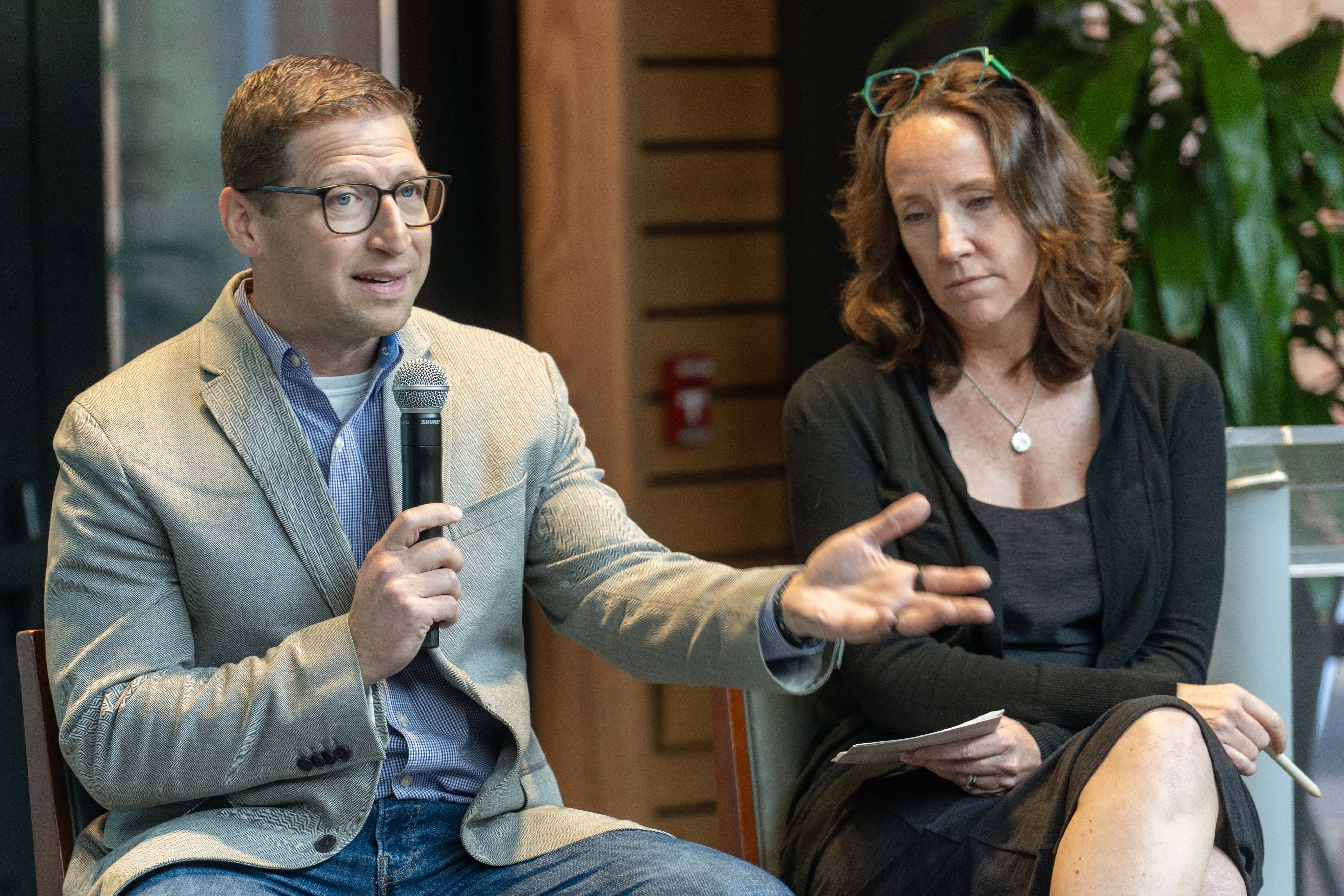
Panel member Dan Haber (MBA ’10), co-founder and chief financial officer of MOVA.AI, shared that their company was built on the new technology.
MOVA.AI provides financial services organizations with a platform to evaluate customer calls for improved engagement, service, sales and compliance. The platform reviews 100 percent of customer calls and interactions and provides personalized coaching for anyone serving the customer or selling to a prospect. This provides organizations with a clearer picture about customer engagement and drives continuous improvement.
Haber has spent his career in applied R&D and analytics and offered his insights about AI governance.
“If you don’t set up some sort of governance structure, or guardrails, people are going to be freewheeling and it will likely compromise sensitive data or intellectual property,” he said. “Beyond secure data management and cybersecurity practices, organizations need to provide employee training, contracts and policy signoffs, so that everyone understands and is bound by the rules of engagement, while also providing employees safe ways to experiment and leverage AI systems without compromising sensitive data and information.”
Haber was joined by Joan Smith, chief engineer and human-centered applied intelligence research leader at Honda Research Institute USA, 99P Labs, and Tylan Tschopp, executive vice president of innovation and industrial design at Westinghouse Electric Corporation.
They spoke to the danger of people using AI to convey an expertise they don’t necessarily have and the fact that AI is a probabilistic model.
“Over time it will keep improving, but it will still make mistakes,” said Haber. “You have to keep the human in the loop.”
He appreciated Smith’s reference to the need for “whole-brained people.”
“It becomes vastly more important that people are authentic, curious and thoughtful about relationship building,” said Haber. “In an organization or team, if you can’t trust what someone is telling you it slows down progress and process.”
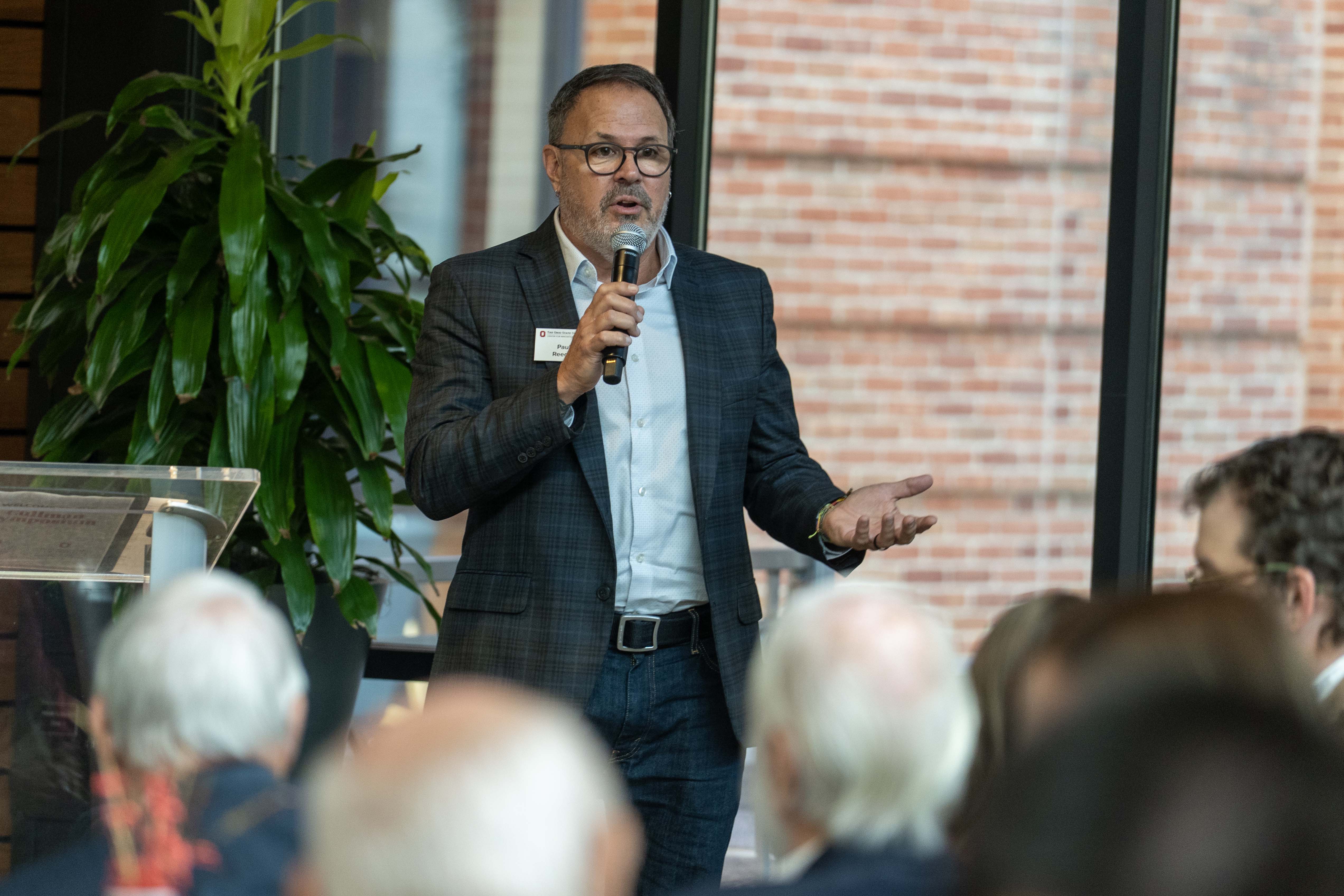
Paul Reeder, executive director of the Center for Innovation Strategies, moderated the panel discussion and praised the participants for their thoughtful engagement with the topic.
He also appreciated the attendees’ responses to an interactive lunchtime exercise that invited them to reflect on a series of questions about AI and work culture, ethics, authenticity, customer relations and more.
“The memorable part of that for me was the diversity of experience we had at our table,” said Anthony, who was seated with two students, a soon-to-be retiree and an early-career professional. “We really focused on the skills piece and reinforced the importance of relationship building, critical thinking skills and the human judgment and decisions. Those themes kept weaving through the conversation.”
She said one student talked about making a career pivot, while the other spoke about being at the intersection of engineering and economics and his appreciation for Ohio State’s focus on AI fluency.
“It’s always cool to hear what students are up to,” said Anthony. “The symposium was a great chance to learn about what’s going on at the university.”
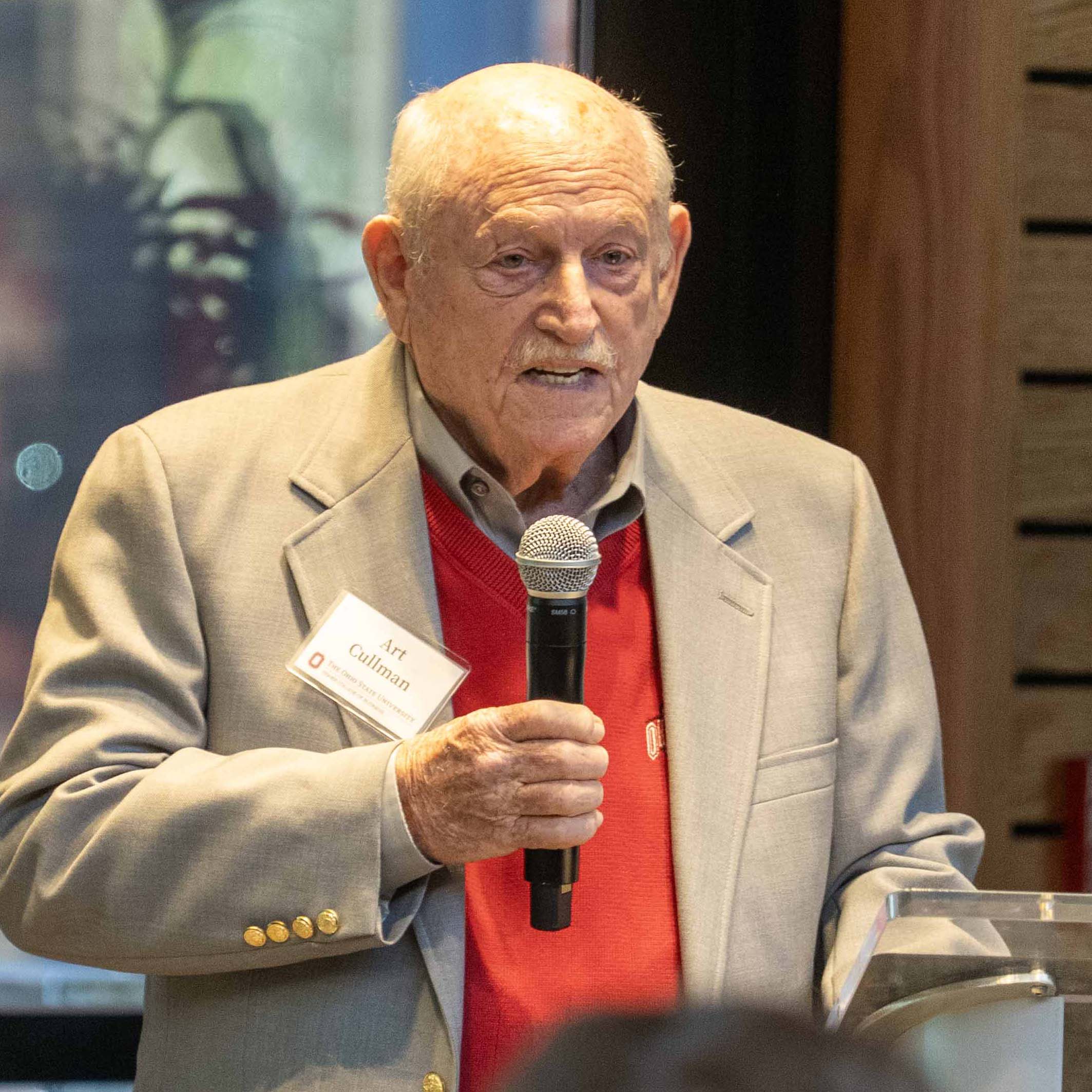
The Cullman Symposium was established through a gift from Arthur “Art” Cullman (PhD ’51). His family continues to honor his legacy through their support of the symposium’s programs that bring scholars and practitioners together in a meaningful exchange around business policy strategy.
Reeder said Art Cullman, Jr. was eager to highlight the confluence of AI and innovation at this year’s symposium.
“I think that everyone who attended was what Roger [Bailey] coined as AI optimistic,” said Reeder. “We all believe this is a good thing and that it will change our jobs, but it’s going to change our jobs for the better as long as we understand how to manage and control it.”
“Ultimately, we wanted people to recognize that they are an important part of the system. It isn’t just the machine driving; the machine can help us, but we’re still making the decisions.”
“I think everyone who attended was what Roger [Bailey] coined as AI optimistic. We all believe this is a good thing and that it will change our jobs, but it’s going to change our jobs for the better as long as we understand how to manage and control it.”