Auditing at altitude: Lexy Payne’s internship at NetJets
By Vicki Christian
Fisher College of Business
When Lexy Payne was 12 years old, she was in awe of the two World War II bombers, a B-25 Mitchell and B-17 Flying Fortress, that flew into her county airport in northeastern Ohio. When she had a chance to board and explore them, she was smitten. At 14, she flew on a commercial airline for the first time and fell in love.
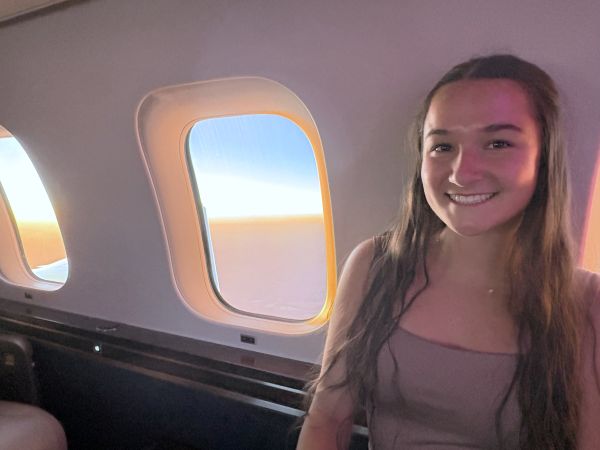
“I remember it being super pretty whenever we popped out over the clouds and could see the sunrise,” Payne said. “It was crazy because I had never seen anything like that before.”
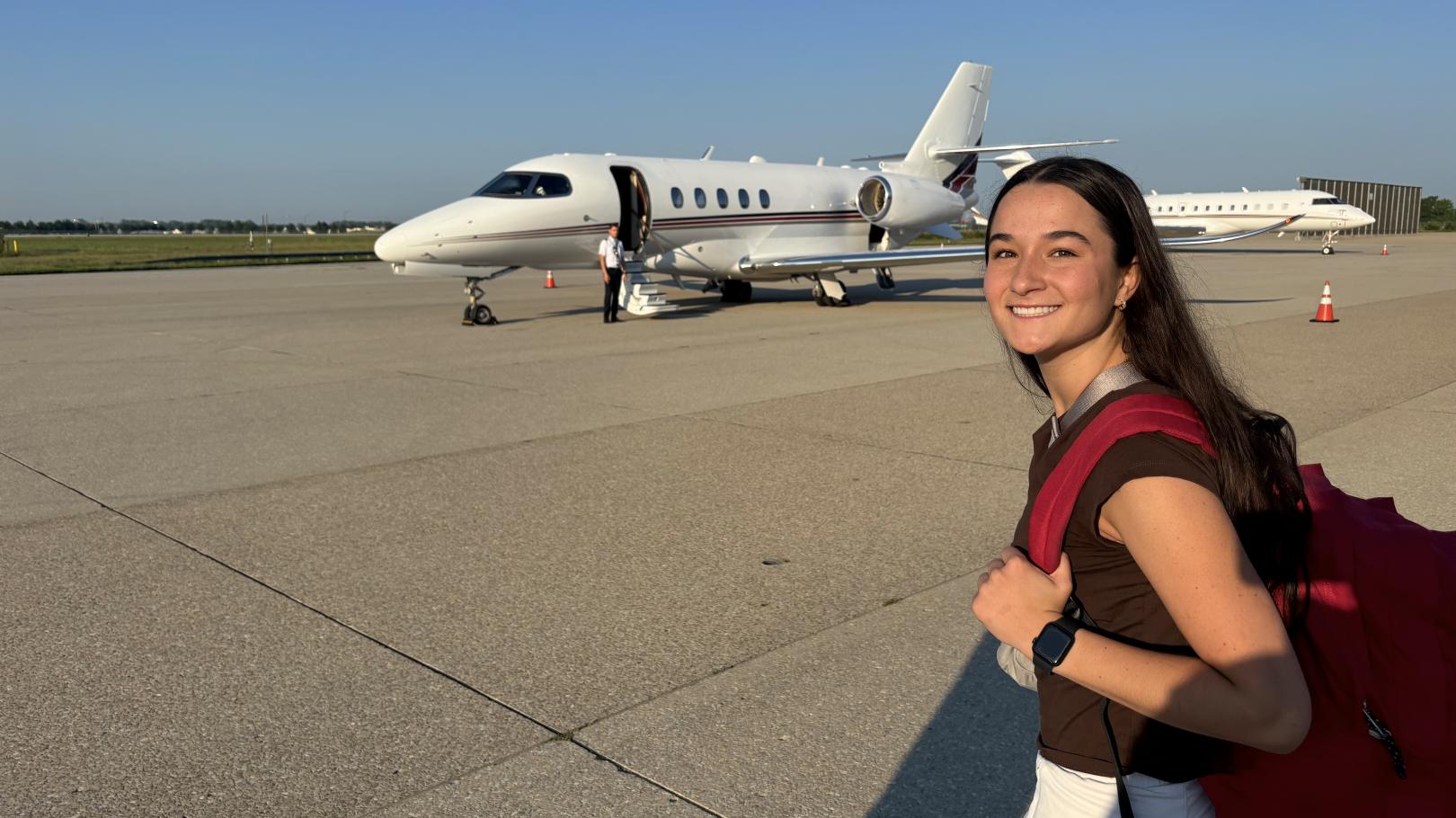
Now, as a rising fourth-year accounting and aviation management student, she combined her love of flying with her interest in business as a summer tax intern at NetJets, a shared ownership private jet company.
In the past, she’s held positions as a guest services representative at Signature Aviation, a scheduling and customer service intern at Flight Safety International and as an airport operations co-op at the Columbus Regional Airport Authority. This was the first time she worked in accounting for an aviation company.
“It was really fun and interesting to get to apply classroom work to what I was doing in the workplace,” she said. “I really enjoy accounting and I had not been able to apply it in my other jobs.”
Her primary duty at NetJets was preparing state and local tax returns for the company. In the process, she developed a strong understanding of the tax filing process and how it fits into the corporate tax cycle.
She was also tasked with understanding how to use a new, recently adopted tax software more efficiently.
“I created a template that will be used in the tax department to automate aspects of the quarterly state estimate process, making it easier to estimate how much the company owes each state in taxes every quarter,” Payne said. “Before, the process was very manual and time consuming.”
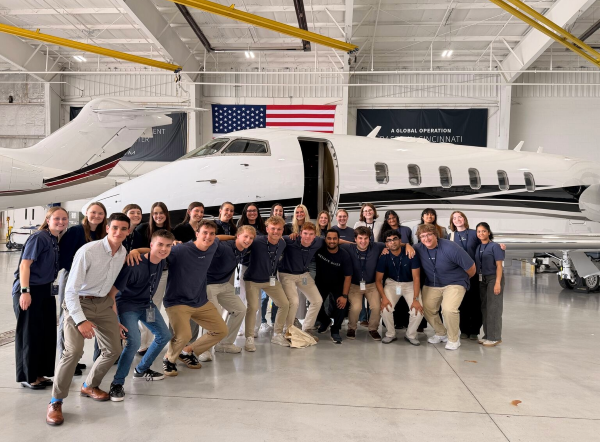
While she was the only intern in the accounting department, Payne regularly interacted with a cohort of 27 other interns across the company.
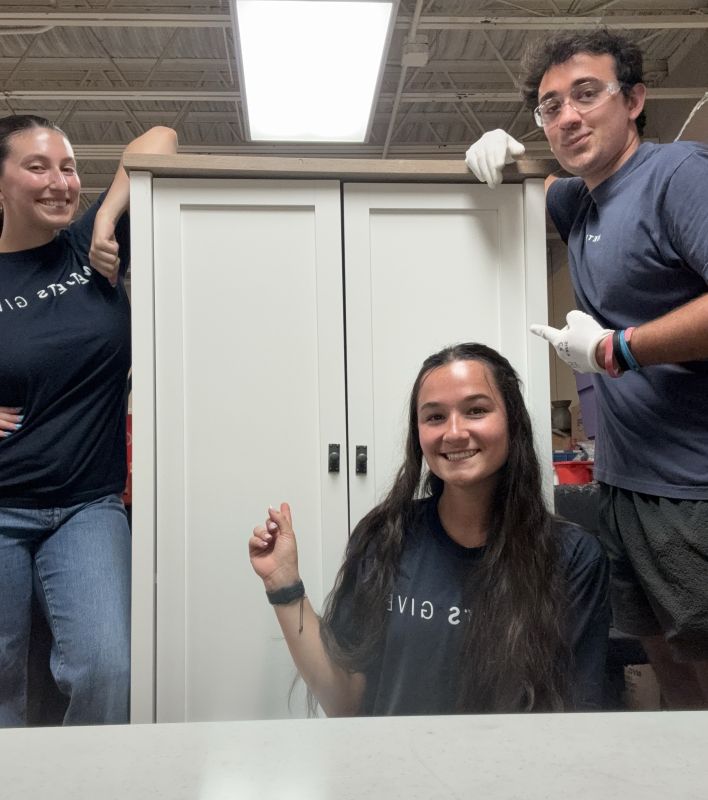
Throughout the summer the cohort volunteered at The Memorial Tournament and the Furniture Bank of Central Ohio. They also toured other aviation companies like NetJets’ sister company Executive Jet Management in Cincinnati.
During the first five weeks of her internship, she teamed up with several other interns to conduct a case study focused on issues related to stocking an aircraft.
“That could be snacks, blankets or any other amenities that are missing or any kind of quality problem,” Payne said.
Her team met with the commissary department in charge of making sure everything that gets put on a plane meets legal requirements, including weight, balance and safety hazards such as batteries. They also familiarized themselves with software used to manage service lockers, the stations at airports where planes are cleaned and re-stocked.
Payne and her team analyzed data from 245 statements issued by crew members and owners about missing items and quality issues. They investigated the cause of each incident, created a statistical report and suggested solutions for the complaints.
To remedy the problems, they suggested implementing an inventory management system, having the owner services team ask customers what specific items they require during a flight and adding more service lockers to help with in-demand items.
“We proposed the inventory tracking system because something could be completely out of stock with no way of knowing unless you're looking for that item,” she said. “Items can be located in places that you wouldn't think to look, like in drawers underneath the seats. There's already an owner-facing app, so we suggested adding a digital guide to show customers where items are on the plane.”
Payne said the case study helped her understand how the company interacts and functions.
“The people at NetJets really want to teach you and want you to get the most out of your experience,” Payne said. “That was probably the most surprising aspect, because I've worked in other jobs where you just show up and get your work done.”
Part of her experience was a chance to shadow the dispatch department. It was a great opportunity for her to see how her recently obtained Federal Aviation Administration (FAA) Certificate of Competency to become an aircraft dispatcher would play out at a private aviation company.
She earned the certificate through Ohio State’s Department of Aviation and said it was probably the most challenging thing she’s done in her academic career. She had to complete an intensive academic and practical training program in flight planning, meteorology, navigation and FAA regulations.
It took two semesters to complete, culminating in a written exam and a five-hour, one-on-one oral test with an FAA-designated examiner that involved creating a flight plan.
“I planned a flight from Columbus to St. Louis, including everything from routing, weather, fuel, weight and balance, whether the plane could fly with a broken part and any additional fuel requirements,” said Payne, who will serve as president of Ohio State’s chapter of Alpha Eta Rho, a professional aviation fraternity.
“Every flight has a dispatcher that has to sign off on the flight or the flight can't leave. The pilot in command and the dispatcher have operational control or the ability to conduct, terminate and initiate any flight. Because the way FAA rules and regulations are written, you can become competent at 21, but you can’t use the certificate until you’re 23 at a commercial airline. Under the FAA’s general operating and flight rules for civil aircraft, I could dispatch at NetJets after graduation.”
Even though she’s had several aviation internships and experiences since that first flight at 14, she’s still as giddy about flying as ever.
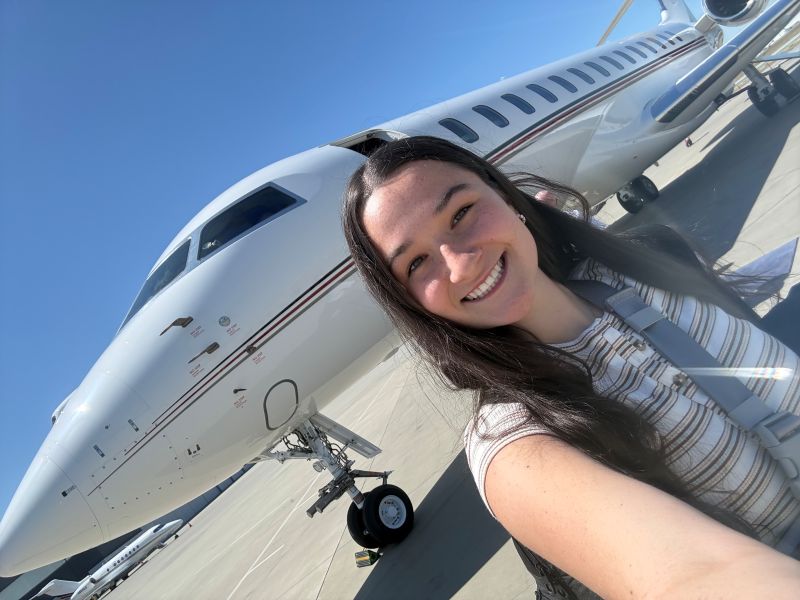
One of the perks of her internship at NetJets was the ability to take advantage of the company’s ferry program by hopping on planes that are repositioning, like the ones she took from New York to Paris and Columbus to California.

“I took a flight on a Bombardier Global 7500, one of the biggest planes NetJets owns, to Van Nuys, California,” she said. “It was amazing! It was pretty much full and it was fun to get to hang out with other co-workers and other interns.”
Returning from that trip, she booked a red-eye flight with Southwest, an experience she said was vastly different than flying private.
“The private flight was insane,” Payne said. “You only have to show up 30 minutes before the flight, there's no TSA and you can pack basically whatever you want. You just walk out, get on the plane and taxi out. And the first thing you notice is how quiet they are — you can talk to people at the front of the plane in a regular voice, whereas I feel like you can barely even hear yourself think on an airliner.”
Payne said the ability to fly on NetJets private planes, as well as her accounting work and time with other interns gave her an amazing journey into the world of private aviation.
“Getting to work for a company that can provide such incredible experiences is truly a privilege,” she said. “I'm beyond thankful for this opportunity.”
“The people at NetJets really want to teach you and want you to get the most out of your experience. Getting to work for a company that can provide such incredible experiences is truly a privilege.”