Executives in Residence Program

At Fisher, some of the best learning happens when students can connect what they’re studying to what’s actually happening in business. The Executives in Residence (EIR) program brings accomplished business leaders and influential alumni into the classroom to share their experience, perspectives and insights with the next generation of Business Buckeyes.
Our executives bring expertise across marketing, consulting, accounting, finance entrepreneurship and more, giving students a firsthand look at the decisions, challenges and opportunities shaping business today. Their stories and experiences make concepts more tangible, challenge students to think differently, creatively and entrepreneurially while helping them see how a Fisher education can translate into meaningful impact.
The EIR program is about more than adding real-world voices to the classroom. It’s about keeping the Fisher learning experience connected to a business world that is constantly changing. Our executives are deeply invested in our students and in the future of business education, helping ensure what students learn today is relevant to the opportunities they’ll face tomorrow.
It’s one of the ways Fisher is expanding the classroom, strengthening connections between business and education and delivering an experience that is active, applied and built for what’s next.
2026 Executives in Residence
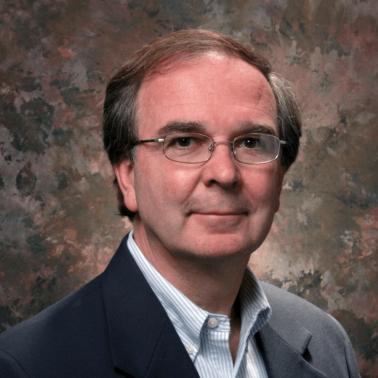
Michael Gade
Mike is an accomplished senior executive, advisor and educator in a career that spans international consulting, executive board membership and leadership at three Fortune 100 companies. Most recently, he has served as senior advisor to the Global Consumer Group at Boston Consulting Group (BCG), guiding its convenience and fuels sector and U.S. retail team.
A marketing, franchising and finance expert in the retail and fuel industries, Mike previously was a senior partner and chairman of Coopers & Lybrand’s retail and consumer practice (now PwC) and the chief marketing officer and senior vice president of merchandising at 7-Eleven, Inc. He spent more than 15 years on the board of directors at the Crane Group and currently sits on the boards of ARKO Corp., a Fortune 500 company, Imagine and Safe Security.
Mike’s dedication to mentoring and educating the next generation of business leaders is evident in his many years as a guest lecturer at institutions such as The Ohio State University Max M. Fisher College of Business and the University of North Texas. In retirement, he and his wife, Regina, volunteer their time with the U.S. Olympic Team. Mike teaches athletes about personal financial management, while Regina provides medical training.
Mike earned his bachelor’s degree in business and his MBA from Fisher.
Get to know Mike
Why did you choose to get involved with the EIR program?
I have been a huge supporter of Ohio State’s Fisher College of Business for many years. My MBA is from Ohio State, and my daughter’s PhD is also from the university. In my view, giving back is critical for both the university and me. Students need broad exposure to a very dynamic environment that seems to be in constant change. I taught in the MBA program at the University of North Texas for 18 years and was the number one rated professor many times. My teaching approach was with live cases, real corporations addressing real issues. My ‘textbook’ was the Wall Street Journal and class was always live with teamwork critical for success. Teaching in this style was intended for students to better understand the dynamic and competitive environment they will soon be entering. Ultimately, it’s about making our students better prepared as they enter the ‘real’ world of corporate America.
What do you hope the students will learn from your participation?
Ultimately, it’s about understanding the competitive marketplace as well as the competition internally within an organization. We will problem solve in groups in most of my class teaching opportunities. And finally, I am a huge believer in how to build a career through life lessons. I have done this for years and every so often they appear in public articles or on-line forums by former students and colleagues. Life Lessons we shall clearly discuss, both from a corporate and personal perspective.
What advice would you give students who are trying to prepare for careers in an increasingly competitive job market; and how can they prepare for a job in the retail/consumer products industry?
The retail/consumer products industry is clearly in constant change: Change in buying behavior, product development, new IT requirements, health/physical concerns, etc. Now, AI is accelerating this overall dynamic. BUT for success in the industry, it’s better understanding the needs and wants of the individual consumer segments. Consumer behavior and their satisfaction is ultimately still the unchanged dynamic, while delivery systems must be tailored to various customer segments.
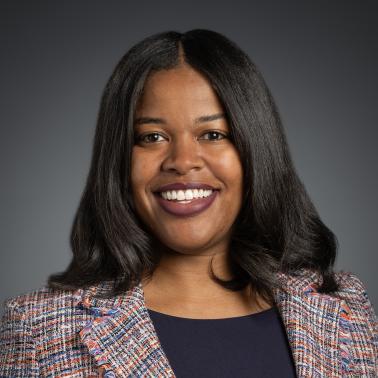
Ciare L. James
Ciare L. James is a dynamic consumer-packaged goods executive with 20 years of experience driving growth, innovation and transformation across leading organizations. She has proven success in managing billion-dollar portfolios, building winning teams and delivering breakthrough results through consumer-centric marketing and general management prowess.
Ciare is currently the chief marketing officer for Bob Evans Farms. Previously, she held leadership roles at Conagra Brands and Procter & Gamble, owning design, delivery and global initiatives for brands including Febreze, Gillette, Reddi-Wip and Banquet.
She is a proud wife, mother and active community member, serving on the Fisher Alumni Board and the United Schools Board of Trustees.
Get to know Ciare
Why did you choose to get involved with the EIR program?
My Fisher MBA experience was truly life changing. The knowledge I gained, the relationships I built with students and faculty, and the professional network I developed all helped shape my personal and professional path. It is a privilege to give back through the EIR program, especially because Fisher has continued to make such a meaningful impact on my life and career.
What do you hope the students will learn from your participation?
I hope students see how their Fisher experience can help them make a strong impact in their chosen fields and contribute positively to the world around them. Through my involvement, I hope they can better connect what they are learning in the classroom and on campus to real-world opportunities, ultimately building careers they love and lives of which they are proud.
What advice would you give students who are trying to prepare for careers in an increasingly competitive job market; and how can they prepare for a job in a field such as marketing?
My biggest advice is to make the most of your time at Fisher and courageously step into experiences that stretch you. In my journey, those moments of discomfort have often been where the most meaningful growth has occurred. Immerse yourself in the challenging coursework, build genuine relationships (especially with people who are not like you) and pursue opportunities that expand your perspective. Don’t play it safe! This is a rare time to invest deeply in yourself and prepare for the future. Leave campus with a broader worldview, a stronger sense of who you are and the confidence to articulate the unique value you bring.
You lead a team of 11 marketers at Bob Evans. What qualities make a good leader and how would you describe your own leadership style?
I believe good leadership starts with a genuine desire to serve others well and the humility to keep growing. It requires self-awareness, openness to feedback, commitment to continued learning and a willingness to refine your approach over time. I try to lead with clarity, care and accountability; my goal always is to create an environment where people feel supported, challenged and empowered to do their best work.
You have said your experience at Fisher was life-changing; what contributed to your experience to make it so?
My MBA experience gave me exposure to new areas of business, visibility to a plethora of possible career paths, meaningful peer relationships and a strong professional network. As a career-changer, those two years gave me the space to explore, recalibrate and better understand how I wanted to apply my talents going forward. That combination of learning, connection and personal discovery made the experience truly life changing.
How do you stay current in your field, and what resources have had the biggest influence on your thinking?
I stay current through intentional pursuit of stretch opportunities on the job, engagement in professional organizations and publications, and ongoing formalized learning and certifications. I also rely on the broad network I have built across industries, functions and levels that I can tap into for inspiration, knowledge sharing and perspective. Most importantly, I stay inspired by the consumers I serve. Maintaining genuine curiosity about people — their needs, behaviors, challenges and aspirations — coupled with a desire to help improve their lives has been one of the most important ways I continue to drive meaningful impact as a marketer and business leader more broadly.
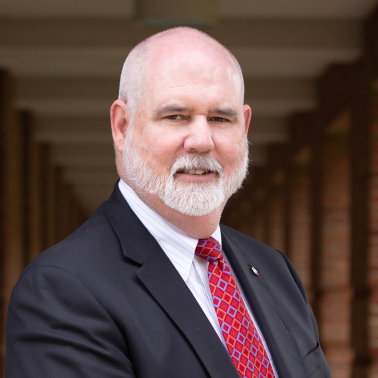
Tim Keenan
Timothy P. Keenan is an active entrepreneur who has been a principal in the building and selling of four businesses. He currently serves as CEO of Keenan & Associates, a strategic planning consulting firm focused on helping small and mid-sized businesses grow into the next level of maturity. Most recently, Tim was president and chairman of the board of directors of High Performance Technologies, Inc. (HPTi). As president, he had overall strategic and operational responsibility for HPTi’s initiatives in developing systems technologies. As one of the original founders of HPTi, he helped to develop and grow HPTi into a dynamic firm known for its combination of creative design and disciplined execution. High Performance Technologies, Inc. (HPTi) (now a subsidiary of SAIC) provides high performance computing, system engineering, and health care bioinformatics to federal government customers including the Department of Defense, Intelligence Agencies, Department of Veterans Affairs and Justice Department.
Under Tim’s leadership, HPTi built the eighth fastest supercomputer in the world, was named one of the top 25 federal contractors by the Washington Business Journal, received the 2008 National Capital Business Ethics Award, the 2009 American Business Ethics Award and was honored with the United States Senate Productivity Quality Award Plaque of Excellence for 2006, 2007 and 2008 and the 2009 Medallion of Excellence in Quality. Additionally, HPTi has flourished to generate record financial results and was named a Top-Ten Growth Firm for 2007, 2008 and 2009 by the Private Company Index.
Tim has been an adjunct professor for GMU’s Executive MBA capstone and an adjunct professor of entrepreneurship at Georgetown University and an Entrepreneur in Residence for the McDonough School of Business. As part of this commitment to others, he serves on the Dean’s Advisory Board of The Ohio State University Max M. Fisher College of Business, the George Mason College of Science Advisory Council, and the James Madison University Deans’ Council for the College of Business. He and his wife, Kathleen, have founded the Center for Entrepreneurship and Innovation at LeMoyne College in Syracuse, NY and the Keenan Center for Entrepreneurship at The Ohio State University.
Tim graduated with a BSBA from The Ohio State University and earned his MBA from Southern Illinois University at Edwardsville. He has received Ernst & Young's Entrepreneur of the Year Award, Ohio State's Professional Achievement Award, GovCon’s Executive of the Year, the American Business Award for Best Executive, Winning Workplace’s Best Boss Award, and the Entrepreneurship Award from Fisher. In 2008, he was inducted into the Southern Illinois University Edwardsville Alumni Hall of Fame.
Get to know Tim
Why did you choose to get involved with the EIR program?
When I was a student at Ohio State’s College of Business there was no program like this, and access to senior executives was not available. I learned throughout my career through senior mentors and real-world discussions with my superiors. Their willingness to give of their time and knowledge was invaluable in developing my career and body of experience. I hope to add this aspect of experiential learning to the Fisher students early in their journey and thereby accelerate their careers.
What will students will learn from your participation?
I believe the students will learn that:
- Business ethics are good business.
- Perseverance is the key trait for any entrepreneur.
- Treat People as they wish to be treated.
- Respect every member of your team and the value of their contributions.
- Your word is your commitment, so never underestimate its value.
What advice would you give students who are trying to prepare for careers in an increasingly competitive job market?
I believe Fisher prepares our students with a great base of business knowledge. The area where we need to help focus our students is in increasing their leadership, crisis management, communication (writing and briefing) and critical thinking. To face today’s job market, candidates must be able to nimbly think their way through very complex business challenges and to handle adverse or adversarial team environments.
How do you identify opportunities that others may be overlooking, and what advice would you give students who want to develop an entrepreneurial mindset?
I will instill in the students I interact with a sense of wonder for solving todays’ business challenges. I have a deep love of entrepreneurial endeavors. Throughout my career, I have sought challenges in business where other firms have failed or have avoided the inherent risks. These types of endeavors provide one with an amazing sense of achievement when you solve the underlying issues and deliver to your customer a successful outcome. It also builds a team camaraderie that provides a work environment that rewards you daily.
If you were starting your career again today, what would you do differently, and what skills would you focus on developing?
On the technical side of skillsets for entering the job market. When I first came into the job market, I was assigned a number of numerically intensive jobs. I was assigned jobs to make sense out of large data sets. So, I would focus on ensuring I had more background in Data Science and Visualization skills so I could turn raw numbers into clear, real-time insights using popular tools of today. But, on the longer-term view of what prepared me for Executive and Leadership roles. There would be earlier and deeper study on the following skills:
- Critical Thinking and Analytical Reasoning: Breaking down complex problems and making sound decisions when data is messy. And data is always messy.
- Adaptability and Resilience: Adjusting quickly to fast-paced industry changes and new technologies. You need to be open to change and do not resist new approaches.
- Leadership and Management: Guiding cross-functional, remote teams and communicating clearly with stakeholders. Dealing with teams from geographically remote places is a reality, and you need to learn to deal with that reality.
- Emotional Intelligence and Empathy: Building trust and collaborating effectively in hybrid or remote work environments. Say what you mean and mean what you say. People need to trust that they can count on you when you speak.
Entrepreneurs are often required to make big decisions without having all the answers. How do you balance risk, uncertainty and confidence when deciding whether to pursue a new opportunity?
An aspiring entrepreneur needs to get very comfortable with imperfect information. You will face decisions where time is critical and the data in front of you is incomplete at best. You cannot wait for the picture to clear entirely. So, to get to the optimum decision, you can put in place a set of criteria that historically lead to the best decisions available. As time moves on, you update these criteria and calibrate your gut. Early on your own confidence will lead the decision, but as time goes on your firms’ systems will provide improved data to reduce risk. It is imperative that the successful entrepreneur constantly move forward while building the underlying infrastructure as time and resources allow.
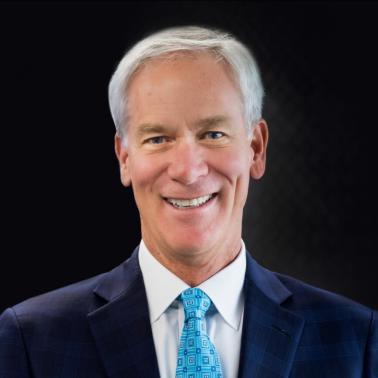
John McEwan
John McEwan is a recognized business leader and Big 4 Partner with over 38 years of experience advising both emerging growth as well as Fortune 500 C-suite executives and audit committees. John has a successful track record of developing and effectively executing transformational business changes including mergers and acquisitions, digital and technology changes and C-suite and board alignment.
John has a broad set of industry experiences, with deep expertise in the financial services and commercial and industrial industries. He is qualified to serve as a financial expert on an audit committee and brings a strong background in corporate governance. John retired as the managing partner of the Central Ohio market at Deloitte. He was responsible for the firm’s growth, quality, strategy, client satisfaction and talent initiatives of the firm’s business. Under his leadership, the office revenues more than doubled by expanding the firm’s market penetration and established a consulting presence addressing critical needs in technology, human capital, financial transformations and cybersecurity.
For over three decades John served as the lead client service partner, audit partner and advisory partner for a diversified portfolio of Deloitte’s most significant clients in the financial services, commercial and industrial, consumer products and retail industries.
John held numerous leadership roles at Deloitte including the global leader for the Deloitte CFO Forum Program, Regional Insurance Practice Leader, Deloitte Board Advisory Council and Central Region Executive Committee. As the Global CFO Forum’s leader John was responsible for CFO Forums by developing and coordinating curriculum for CFOs from the world’s largest companies.
As a leader in Deloitte’s Center for Board Effectiveness, he was an executive sponsor for numerous client programs addressing key issues and leading practices for corporate boards. John was a leader in diversity and inclusion efforts, including establishing the diversity and inclusion council that supports over 400 professionals in the Columbus office and initiating the Board-Ready Women program designed to help prepare women leaders for Board memberships.
John has a strong reputation in the business and civic community. He has served as the Chair of the Board of Directors for the Columbus Chamber of Commerce, The Ohio Business Roundtable, The Columbus Partnership, and Fisher’s Dean’s Advisory Council at The Ohio State University.
John currently serves as senior advisor For ArkMalibu an investment banking firm and advises several private entities. John has also been an active supporter of many nonprofit organizations including United Way, Leukemia society of America and The American Heart Association.
John graduated from The Ohio State University with a BSBA in accounting and has completed executive programs at Columbia Business School and Kellogg Graduate School of Management. John is a Certified Public Accountant and a member of the AICPA and the Ohio Society of CPAs.
Get to know John
Why did you choose to get involved with the EIR program?
I am excited to be involved in the Executive in Residence program to give back to Fisher College of Business by paying forward to the students. I want to share my career experiences and knowledge to hopefully have a positive impact on the students who will become our future leaders
What do you hope the students will learn from your participation?
I hope to enlighten and motivate students to maximize their potential. I always thought the most impactful experience in my education was to hear from others who had once sat in my seat sharing their experiences and counsel. If you were sitting in my seat knowing what you know now what advice would you give me?
What advice would you give students who are trying to prepare for careers in an increasingly competitive job market?
My advice to students preparing for a completive job market is to invest in yourself. Make use of every opportunity at Fisher to broaden your knowledge of the world you are entering. Recognize this is just the very beginning of your lifelong learning and you need to embrace change and new challenges.
As AI and automation continue to reshape business, what skills do you believe will most differentiate successful professionals over the next 5 to 10 years?
Regarding AI and automation and what skills to differentiate yourself, I believe it comes down to using your whole brain. What I mean by that is that these new technology changes are tools to be used. You will need to be knowledgeable of the tools, but more importantly be curious and creative in using those tools to achieve and improve processes and life. Always have the “thinker” mindset.
What's something you believe about career success that most people disagree with?
I am not sure if most people disagree with this but I believe the human element is critical in achieving success. Most of the successful people I know not only had a skill but they understood the needs and wants of their fellow workers and clients. It is what separated them from the crowd.
What’s an experience from your professional journey that you often find yourself reflecting on or sharing with others?
For me, while there were several key experiences there is a common theme in all of them. It was simply not being afraid of challenging myself and understanding that each challenge is really an opportunity to grow and learn. Life is a journey and pushing yourself to your potential is very rewarding. Don’t be afraid to try something you might fail at.

Gary Peterson
With decades of experience, Gary Peterson, a recipient of the 1999 Shingo Prize, demonstrates that respect for people is the ultimate competitive advantage. As executive vice president of supply chain and production at O.C. Tanner, Gary led the transformation that delivered an 800 percent productivity increase and created one of the most studied and sustained Continuous Improvement Cultures worldwide.
With his deep experience, Gary is just as comfortable advising executives on strategy and cultural transformation, guiding operational leaders in system design and engaging front line teams to drive performance. As a consultant, his clients benefit from his combination of global thought leadership and practical experience in hitting daily production numbers.
He served on the Shingo Institute’s Executive Advisory Board for more than a decade, is an active Shingo examiner evaluating prize applicants worldwide and is an inducted member of the prestigious Shingo Academy.
His specialties include embedding Shingo-aligned behaviors that last, Leader Standard Work, Strategy Deployment (Hoshin Kanri), cultural transformation and turning respect for people into measurable business performance.
Get to know Gary
Why did you choose to get involved with the EIR program?
For many years, I've been involved with the Master of Business Operational Excellence (MBOE) program through teaching classes, hosting cohort visits and mentoring students. I've also had the opportunity to work with members of the Fisher faculty and administration. In my view, it is one of the finest programs of its kind. Expanding my involvement to the broader Fisher College of Business was a natural next step and an opportunity I was excited to embrace.
What do you hope the students will learn from your participation?
I hope students gain confidence in both the value of their business education and their ability to make a meaningful difference. Success is important but so is helping organizations become places where people can grow, contribute and thrive.
What advice would you give students who are trying to prepare for careers in an increasingly competitive job market?
I hope students come to believe that their role is not simply to make organizations more efficient and effective, but also to help make them better places for the people who work there. The most successful consultants, entrepreneurs and leaders learn to recognize the potential in others and help bring it forward. My encouragement is to develop that ability early and practice it often.
As an executive coach, consultant and teacher, what is your view on emerging technology such as AI and how should it be used and monitored in a profession such as yours?
AI is an extraordinary tool that can make many aspects of our work faster and easier. It is especially valuable in handling routine tasks, administrative burdens and other forms of drudgery that consume time and energy. When used well, it frees us to spend more time thinking deeply, solving problems and creating value. The danger arises when we allow it to replace our own thinking, judgment and strategic reasoning. We still need to cultivate curiosity, ask thoughtful questions and seek deeper understanding. AI can create the appearance of clarity but if we're not careful, it can also mask shallow thinking. The goal should be to use AI to enhance learning and decision-making, not replace them.
How do high-performing professionals stay intentional about their career growth rather than simply reacting to opportunities?
The professionals who thrive are often the ones who focus on elevating the people around them. Rather than concentrating solely on their own success, they help others become stronger, more capable and more successful. In doing so, they build trust, strengthen relationships and create opportunities for growth that benefit everyone, including themselves. Just as importantly, helping others succeed makes work more enjoyable. When you invest in the growth of those around you, you create a stronger team and a more rewarding experience for everyone involved.
How do you help clients identify strengths they don't recognize in themselves?
I believe the best way to understand someone's strengths is to observe them where they do their work. By watching them in action and discussing the decisions they've made and the opportunities they've created, I can help them recognize the value they bring. Often, the abilities that come most naturally to people are the very strengths they overlook in themselves.

Gary Price
Gary Price was appointed chief risk officer of Battelle in October 2021. Battelle is the world’s largest private research institution, with a focus on scientific and technical advances in chemistry, biology and advanced materials. Gary leads Battelle’s Enterprise Risk Management process, along with providing oversight and experience in the area of risk related to major company initiatives, business pursuits and complex transactions. He also served as Battelle’s interim chief information officer from April 2022 – October 2022, leading over 100 IT professionals supporting the business.
Prior to joining Battelle, Gary was most recently PricewaterhouseCoopers’ (PwC) U.S. partner affairs leader and chief administrative officer. In this capacity, he was responsible for all partner-related matters. As a member of the U.S. leadership team, his responsibilities also included executing firm strategy and aiding in the firm’s digital transformation. From 2007-2014, he was PwC’s Southeast region managing partner (based in Atlanta). Under his leadership, the region experienced 50 percent growth in revenue and a significant increase in partners and staff.
Gary joined PwC in 1983 and spent his career advising clients in both the firm’s assurance and advisory practices and has advised clients from across many industries and sectors, including transportation, manufacturing, retail and consumer, financial services and energy and utilities.
He is a member of the American Institute of Certified Public Accountants (AICPA) and the Ohio Society of Certified Public Accountants. He received his undergraduate degree in 1983 from The Ohio State University.
Gary and his wife Mary Ellen have four adult children and they reside in Columbus, Ohio.
Get to know Gary
Why did you choose to get involved with the EIR program?
I am passionate about the success of Fisher College of Business. I am a very proud alum, and I want current and future Fisher students to have the best possible experience.
What do you hope the students will learn from your participation?
I hope the students learn some of the things that cannot be taught in a classroom that comes with 40+ years of professional experience such as leading people through change and challenging situations, navigating grey space, principled leadership and the importance of building one’s network.
What advice would you give students preparing for careers in an increasingly competitive job market, particularly those interested in risk management?
First, avoid comparing yourself with others — the person in the mirror is the one who matters most. Find work you enjoy and pursue it with passion and pride. To succeed in risk management, become a broad business thinker who understands the organization’s value drivers. Remember that every situation has two dimensions: risk and opportunity.
How has AI and other emerging technology altered risk management? What should Fisher students know about the use of AI in the industry?
AI has forever reshaped the way business is done. However, it’s not about the technology. The real change is the opportunity to reimagine the way work gets done and then applying the new technology to make it more effective and efficient. For risk management professionals, the challenge is not to slow down the use of AI and innovation, it’s to create the proper governance to give the organization the confidence to go fast.
How do you encourage innovation and growth while ensuring the organization remains within its risk appetite?
To encourage innovation and growth, you need to work closely with the business leaders and understand their objectives, then build the right governance and controls to enable their success. Risk management is not a “bolt-on,” rather it should be built into the work and culture of the organization.
What books, podcasts or resources have had the biggest influence on your thinking?
Books include “The Trusted Advisor,” “Built to Last” and “Atomic Habits.” On LinkedIn there are a couple of key AI influencers that really make a difference including Ruben Hassid, Andrew Ng and Ethan Mollick. And some old standbys include The Wall Street Journal and The Economist.