On “Invisible” Leadership: An Interview with Kim Custenborder

For one of my courses at Fisher, Personal Leadership and Team Effectiveness, I had the privilege of identifying and interviewing a leader who has made a meaningful impact, not only on my life but on the lives of others, too. That search led me to Kim Custenborder, a woman who exemplifies leadership across many roles in her life.
Overall, the interview left me with an impactful question: What is the risk of overlooking the “invisible” roles in an organization’s success?
I first met Kim through high school basketball about three years ago. She came to my school to assist her son, Connor Custenborder, in coaching the girls' basketball team. With 16 years of coaching experience prior, she brought knowledge and passion to our program. Kim earned her Bachelor of Science in Business/Marketing at Thomas More College, and she is currently the Vice President of Northern Sales at Prosperity Promotions, a family-owned business founded by her father in 1992 and headquartered in Louisville, Kentucky. Kim has since expanded the company to her current hometown in Versailles, Ohio.
When I asked Kim who her greatest influence was, she answered without hesitation: her father, Lou Byron. From a young age, she observed Lou’s exceptional leadership across business, coaching, parenting, and everyday life. One lesson that shaped her deeply was learning to “care about people without getting glory for it.” Kim embodies this humility by being generous, quick to share credit, and intentionally uplifting others. She also shared a powerful insight from her father: everyone has a different measure of “best.” As a leader, her goal is to help people reach their best, even if that looks different from someone else’s. For example, one employee’s best might not have the same impact as another’s, but if it’s truly their best, it’s worth celebrating.
Kim celebrates every victory, big or small. She rewards her team both mentally and physically, offering compliments, ringing the sales bell, jumping with excitement, and even giving monetary bonuses. These gestures build up other people and their connections with her. She believes confidence stems from being heard, so she makes it a priority to include her employees in decision-making and genuinely listens to their ideas. “I don’t think my way is right,” she said. “We try to figure out what is the best way.”
Kim’s leadership philosophy is rooted in collaboration, not ego. Whether she’s managing a business or coaching basketball, her approach remains consistent: every person matters. From the water girl to the point guard, from the janitor to the manager, everyone plays a role in the team’s success.
Kim’s leadership philosophy centers on one powerful truth: everyone is valuable. She treats every member of her staff with equal respect and appreciation, regardless of title or role. Her belief in team progress challenges me to rethink how we define contribution and success.
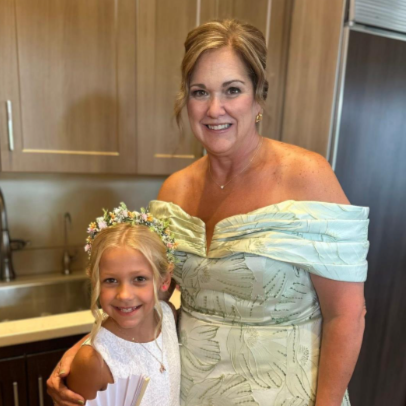
Kim Custenborder is a seasoned leader, coach, and business executive who brings humility, collaboration, and heart to every role she holds. With 16 years of coaching experience and a Bachelor of Science in Business/Marketing from Thomas More College, Kim currently serves as Vice President of Northern Sales at Prosperity Promotions—a family-owned company she helped expand to Versailles, Ohio. Inspired by her father’s example, Kim leads with generosity and a deep belief in the value of every individual. Whether in business or on the basketball court, she celebrates progress, uplifts others, and fosters confidence through inclusion and shared success.