Designing Hybrid Work for Clarity, Contribution and Performance

Hybrid work is often framed as a debate about location.
Office or remote?
Three days in or two?
Core hours or full flexibility?
Yet leaders focused on operational excellence know the real issue isn’t geography. It’s design.
If the last several years have revealed anything, it is that most professionals can and will get their work done across a variety of environments. What hybrid work has also exposed to the most observant leaders is something deeper: performance is not one-size-fits-all.
However, many organizations still attempt to standardize people the same way they standardize processes.
Rewiring the Belief System
Hybrid work becomes more effective and successful when leaders move beyond uniform policies and begin designing more personalized performance agreements.
In manufacturing, healthcare, utilities, or financial services, we would never assume that every process should operate under identical conditions. We evaluate inputs, constraints, variability, and output requirements. Then we design and optimize accordingly.
Human performance deserves the same rigor.
Some professionals produce their highest-quality work through deep, uninterrupted focus. Others generate their best ideas through rapid collaboration. Some roles require proximity to equipment or cross-functional teams; other roles require cognitive bandwidth more than physical presence.
Hybrid work exposes what has always been true: people do not create value under identical conditions.
Organizations thrive when they resist one-size-fits-all consistency and instead design systems that align individual strengths and needs with clear expectations, measurable outcomes, and shared accountability.
The Real Risk
When leaders express concern about hybrid environments, the themes are consistent:
- Communication gaps
- Reduced collaboration
- Accountability concerns
These risks are real, but hybrid work did not create them. It revealed them.
Systems designed around visibility instead of clarity struggle when proximity disappears. If performance depended on seeing someone at their desk, then the performance system was fragile from the start.
Operational excellence requires leaders to define:
- What success looks like
- Who owns which outcomes
- How progress is measured
- Where collaboration genuinely adds value
- Which routines maintain alignment
When those elements are clear, location becomes secondary. Clarity is the real productivity tool.
From Busy to Contribution
Hybrid environments remove the illusion that activity and busyness equals impact.
- Hours logged
- Meetings attended
- Messages sent
These are activity metrics, not measures of contribution.
A culture of contribution asks a sharper question: How does this role, this task, this project move the larger mission of the organization forward?
When leaders help team members understand how their work connects to broader organizational goals, accountability strengthens and engagement increases. Not because someone is watching, but because the work has more clarity, more meaning and real impact.
Designing for Excellence
The theme of this year’s COE Summit asks leaders to reexamine how we define and deliver operational excellence.
Hybrid work offers a powerful test case.
Are we willing to:
- Design smarter systems instead of relying on tradition?
- Replace uniform rules with intentional alignment?
- Measure outcomes instead of monitoring activity?
The future of hybrid is not about remote versus in-person. It’s about whether leaders will choose to engineer work environments that allow each team member to perform at their highest level — while still delivering strong, measurable results.
This requires sharper thinking, smarter systems, and a commitment to contribution over convenience.
In April, we’ll explore how leaders can move from hybrid uncertainty to hybrid intentionality, building cultures of contribution that strengthen engagement, increase retention, and elevate performance across diverse teams and industries.
Because excellence isn’t a location. It’s a design choice and a leadership priority.
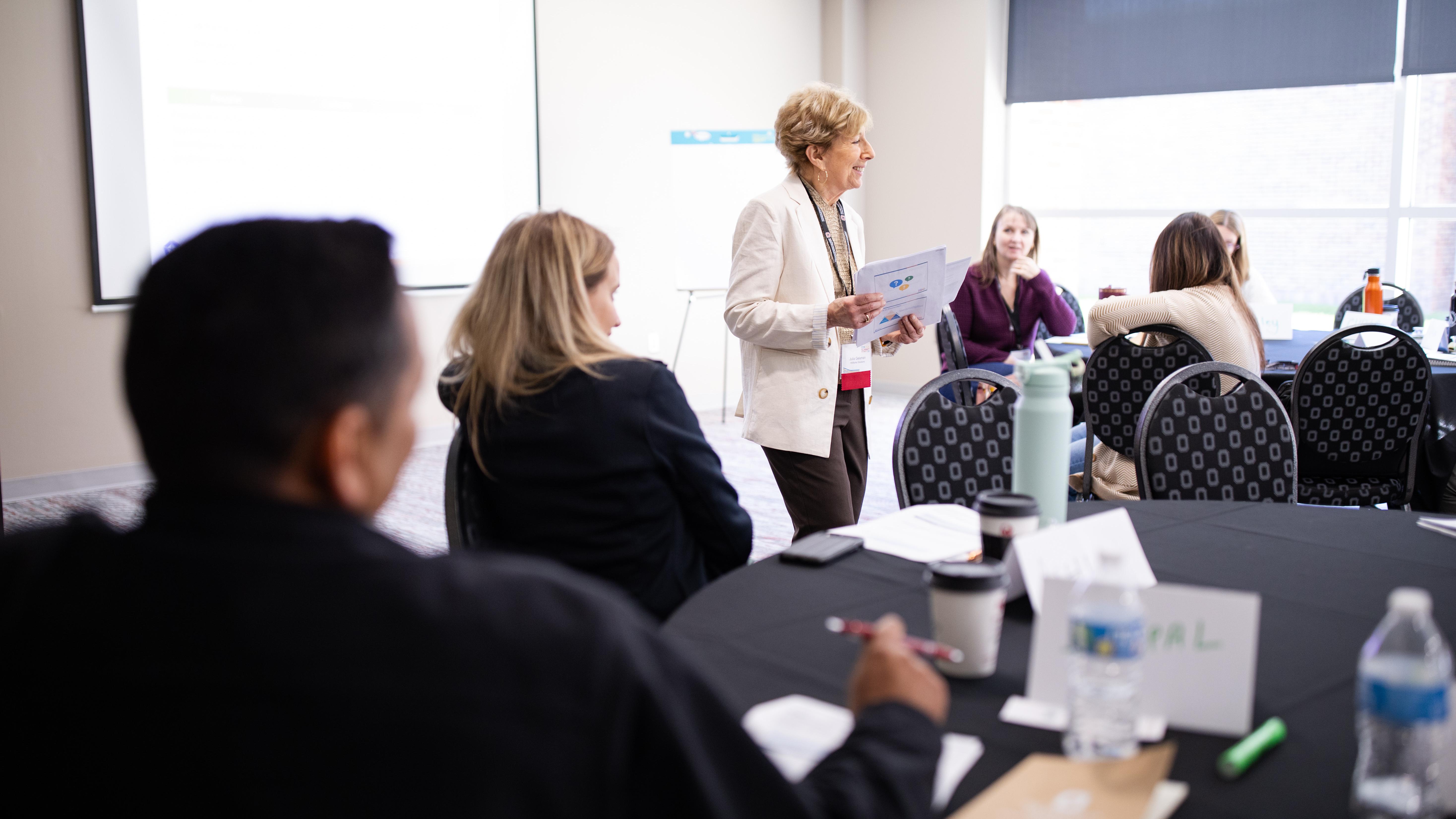
Interested in creating a culture of contribution? Elisabeth Galperin will lead a breakout session at the COE Summit 2026 on Wednesday, April 8. After participating in Elisabeth's session, attendees will be able to:
- Lead with clarity and confidence by implementing systems that align team goals, communication, and accountability across hybrid environments.
- Solve performance and engagement challenges through practical strategies that strengthen connection, collaboration, and contribution.
- Foster a culture of trust and ownership that empowers employees to deliver results, stay engaged, and embody company values in both in-person and remote settings.
The Ohio State University Center for Operational Excellence Summit, now in its 13th year, is a three-day event dedicated to connecting diverse industries to the latest best practices in leadership and continuous improvement. This year’s Summit will explore how organizations are rewiring excellence with emerging tech, bold strategies, and future-ready thinking. Top authors, researchers, and lean practitioners will share insights on operationalizing AI, innovating processes, and navigating disruption with clarity and confidence.
COE Summit public registration is now open!