Stepping Into Value: A Capstone Analysis of Designer Brands Inc.
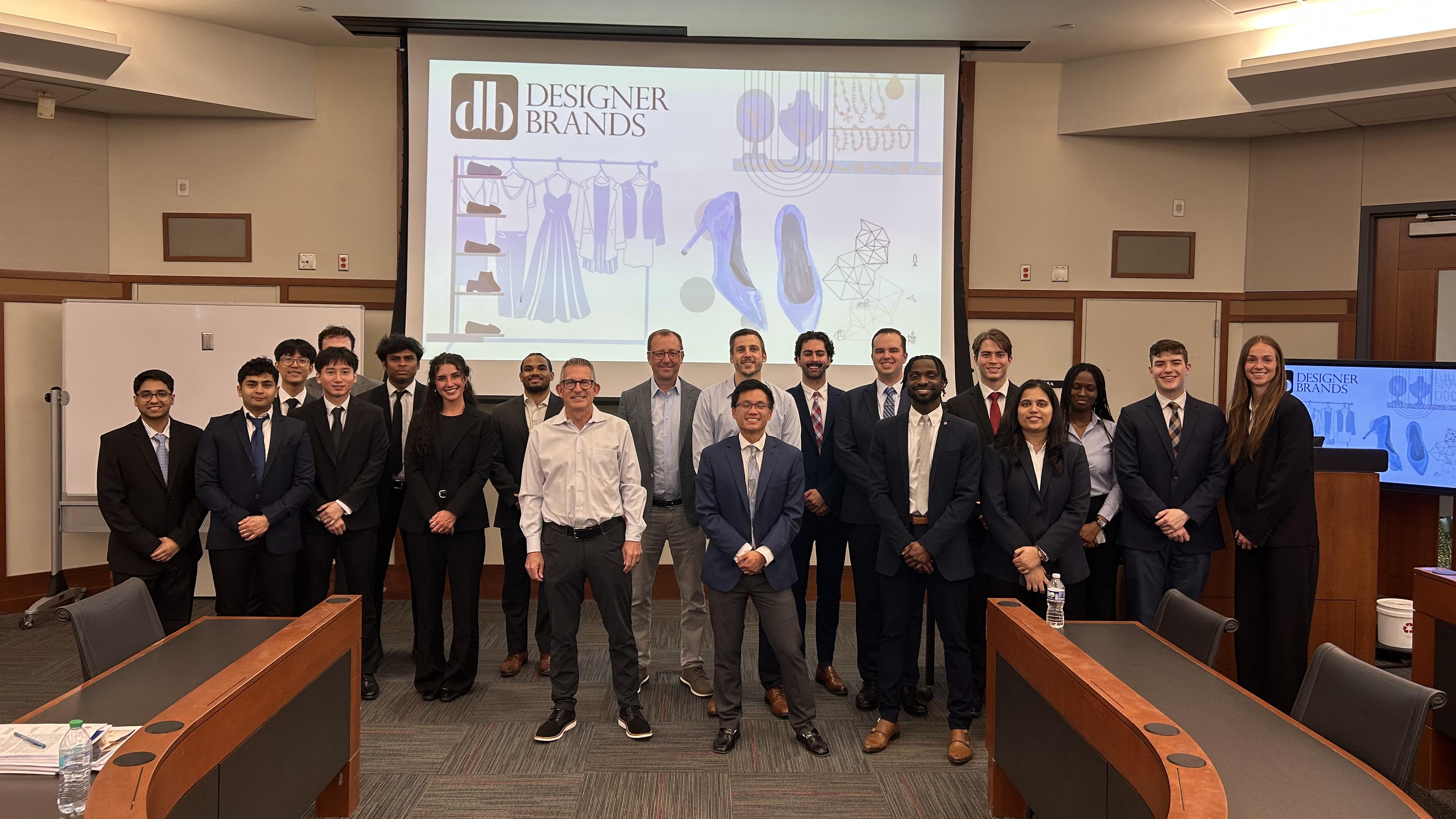
One of the most profound and impactful experiences in my time at the OSU SMF was our Finance Capstone Project in Session 2 of the Spring semester. Our class was split into four groups, each of which were assigned to the firm Designer Brands (DBI), to come up with solutions regarding DBI’s twin problems: a heavy decline in cash flow, and heavy leverage financing. The project itself included a dense PowerPoint deliverable along with a presentation PowerPoint. We presented our potential solution ideas to a panel of four judges.
The project seemed daunting at first. I had very little knowledge of Designer Brands as a company, knowing only that they operated the DSW shoe stores. After beginning thorough research, I became much more familiar with DBI, not only with their history and operations, but also with the firm’s financials. A little background, DBI pursued a series of acquisitions in 2018 and 2019, which expanded DBI’s portfolio of products, but left little financial flexibility for 2020 when the COVID-19 pandemic accelerated the use of e-commerce platforms and destroyed in person retail. Management responded with an emergency capital infusion using a term loan and an asset backed revolver, which ultimately spiraled the firm into the poor financial condition we know today.
After having done research, my group and I began coming up with potential solutions. DBI’s operating margin had crashed in 2025, turning a gross margin of 43.6% to an operating margin of 1.65%. Revenue had declined, store traffic had declined, and fixed costs such as occupancy and store selling expenses had remained constant, squeezing DBI’s ability to generate cash. Paired with these cash flow problems, DBI faced an interest expense from its debt that was consuming larger portions of its operating profit each year, and a large term loan maturity in 2028 which DBI in their current state would be unable to oblige.
We came up with many solutions, but a few stood out to us. Shrink to grow became our slogan, and we argued that to solve the cash flow issues, DBI must first cut its worst performing stores and cut personnel and marketing costs aggressively to recover operating margin to healthier levels. Doing so would come at the sacrifice of revenue growth, but we argued in order for DBI to continue its operations; it would first need to shrink to grow in the future. We decided for our financing solution that DBI could potentially obtain a credit rating (B- at worst) and issue $500M of HY Debt to shrink the revolver and pay the term loan at maturity in 2028. Doing so would reduce DBI’s effective interest rate by 2.5%, and would also lower interest expense, freeing up more cash for DBI.
While the Capstone Project presented many challenges, it was a great learning experience for me. I became much more familiar with PowerPoint and different functions in Excel and learned about a local business that was fighting a two-front war. I am proud of how our group presented our ideas and am grateful for the experience in not only researching and coming up with solutions but also practicing presenting in front of an audience.